Blueprint for Prosperity: Your Essential 2025 Financial Guide
As 2025 unfolds, developing a comprehensive financial plan has become a top priority for many, with online searches revealing common questions about emergency savings, debt management, and investment strategies. This article presents a "Blueprint for Prosperity" - a five-step guide to assist readers in navigating their financial journey and building a secure future.
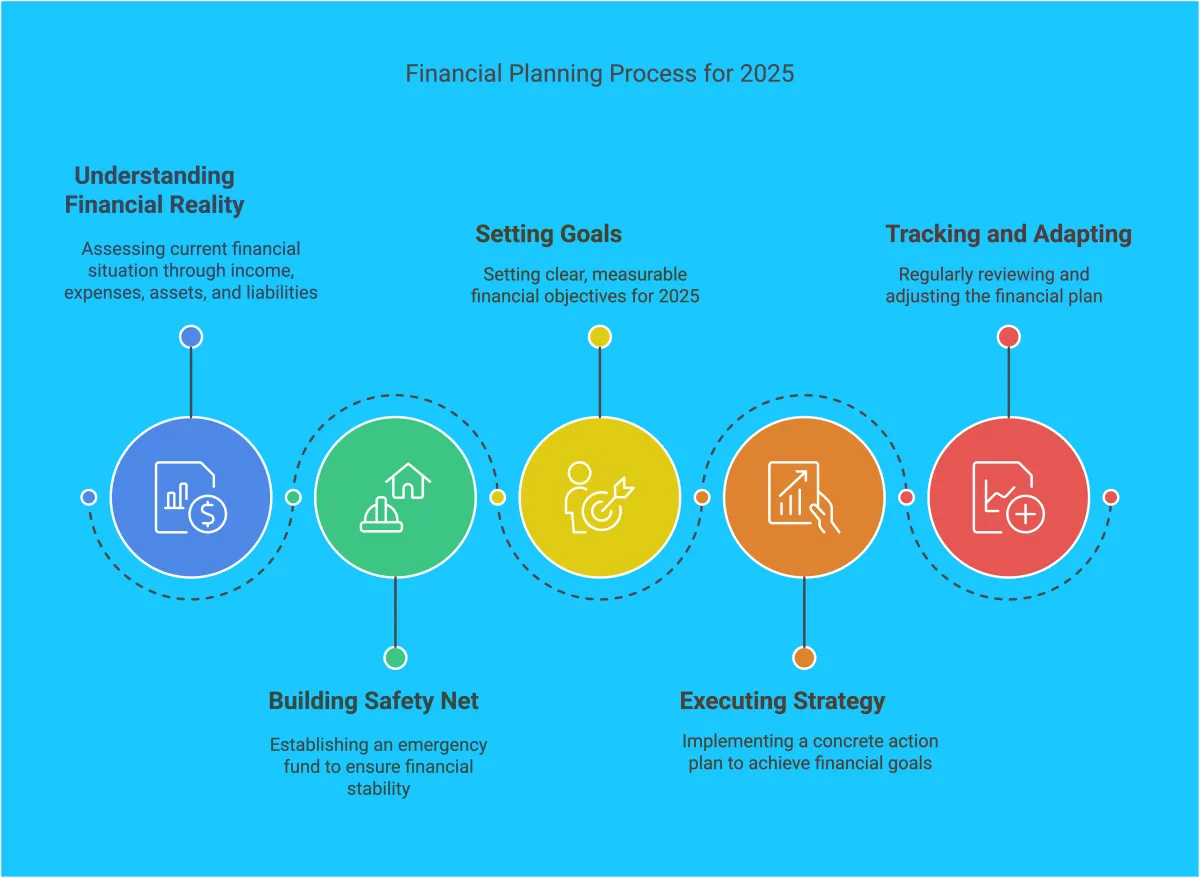
Step 1: Understanding Your Financial Reality
To embark on a successful financial journey, the first crucial step is to gain a clear understanding of your current financial situation. This involves a comprehensive assessment of your monthly income, meticulous tracking of expenses, and thorough documentation of all assets and liabilities. By creating this financial snapshot, you establish a solid foundation for identifying areas that require improvement and for setting realistic goals for the year ahead. Calculate your monthly income from all sources
• Track and categorize your expenses for at least a month
• List all assets (savings, investments, property) and liabilities (debts, loans)
• Determine your net worth by subtracting liabilities from assets
• Analyze spending patterns to identify potential areas for cost-cutting or reallocation
Step 2: Building Your Safety Net
Establishing a robust emergency fund is critical to financial stability. Financial experts recommend maintaining 3-6 months of living expenses in an easily accessible account. This safety net serves as a buffer against unexpected events such as job loss, medical emergencies, or major repairs. Prioritize building this fund before pursuing other financial goals to ensure you're prepared for life's uncertainties.
• Start with a small, achievable target (e.g., $1,000)
• Gradually increase savings to reach the 3-6 month goal
• Keep funds in a high-yield savings account for easy access and growth
• Regularly review and adjust the fund size as your expenses change
• Consider this fund your first line of defense against financial setbacks
Step 3: Setting Goals and Taking Action
Setting clear, measurable objectives is crucial for financial success in 2025. Prioritize goals such as debt reduction, retirement savings, investment growth, major purchases, and education funding. Create specific targets for each area, considering both short-term and long-term aspirations. Once goals are established, implement an integrated strategy that aligns with your objectives and risk tolerance.
• Develop a balanced investment portfolio
• Optimize tax strategies to maximize savings
• Set up automatic savings systems for consistent progress
• Review and update insurance coverage to protect assets
• Create a debt repayment plan, focusing on high-interest debts first
• Allocate funds for retirement accounts, considering employer matches
• Establish separate savings accounts for specific goals (e.g., home down payment, vacation)
Step 4: Execute Your Strategy
Implementing a concrete action plan is crucial to achieving your financial goals. Start by automating your finances to ensure consistent progress toward your objectives. Set up automatic transfers to your savings accounts, investment portfolios, and retirement funds on payday. This "pay yourself first" approach helps prioritize your financial goals.
Break down your larger financial objectives into smaller, manageable steps. For instance, if you aim to save £10,000 for a deposit by year-end, set monthly savings targets of around £833. Regularly review your progress and adjust your strategy as needed. Utilise budgeting apps or spreadsheets to track your spending and savings, celebrating small wins along the way to maintain motivation. Remember, flexibility is key—be prepared to adapt your plan as your financial situation or priorities change throughout the year.
Step 5: Track and Adapt
Regularly reviewing and adjusting your financial plan is crucial for long-term success. Most experts recommend revisiting your goals and financial projections at least once a year. This annual check-up enables you to identify patterns in income and expenditure, assess if your financial goals are still relevant, and make necessary adjustments.
Establish a routine for evaluating your financial plan at intervals that suit your needs, whether quarterly, biannually, or monthly. During these reviews, compare your actual financial performance against projected outcomes, identify discrepancies, and implement data-driven adjustments. Remain open to change as your circumstances evolve.
Embrace flexibility in your budgeting strategy to adapt to market trends, shifting priorities, and unforeseen challenges. Consider scenario planning to prepare for various potential outcomes and ensure your financial strategy remains resilient and aligned with your goals.
Bonus: Connect with Ciprian Bratu
For expert guidance on implementing your financial plan and staying ahead of market trends, connect with Ciprian Bratu on LinkedIn. As a seasoned wealth manager with CISI and CII affiliations, Ciprian provides valuable insights into financial planning, wealth-building strategies, and personalised investment approaches. His client-first philosophy and commitment to clear communication can assist you in navigating your journey towards financial freedom.
Follow Ciprian Bratu at https://www.linkedin.com/in/bratuciprian/ for regular updates on financial trends and strategies to optimise your 2025 financial roadmap.