China Defies the Hormuz Blockade: Why Expat Portfolios in Asia Face a Second-Front Risk
A Chinese oil tanker defied the US naval blockade of the Strait of Hormuz last week. US intelligence agencies allege China is preparing to ship MANPADs to Iran through third parties. Beijing's defence budget is up 7% to approximately $278 billion. These are not isolated headlines. They represent a second axis of geopolitical risk that could reshape portfolio outcomes for every expat living and investing in Asia. This post breaks down what China's Hormuz defiance means, how it connects to the Taiwan Strait, and what you should be doing with your portfolio this week.
Key Takeaways
- China defied the US naval blockade at Hormuz, escalating the conflict from a US-Iran dispute into a potential US-China confrontation.
- US intelligence alleges China is preparing MANPAD shipments to Iran. If confirmed, this changes the conflict from a regional crisis to a superpower standoff.
- China's defence budget has risen 7% to ~$278bn, and PLA posturing near Taiwan continues in parallel with the Hormuz crisis.
- Expats in Asia with China-heavy ETFs, EM allocations, or tech sector employment should reassess concentration risk now.
Why Did China Defy the US Blockade at Hormuz?
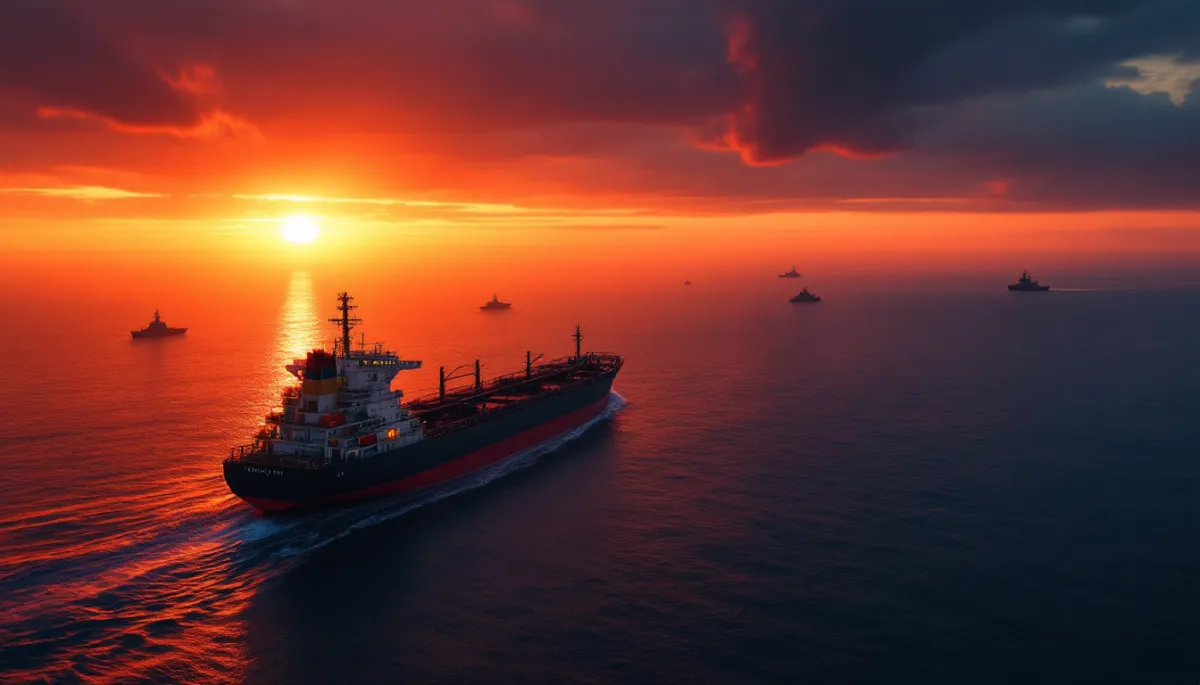
A Chinese oil tanker recently sailed through the US naval blockade zone, directly challenging American enforcement of the strait closure. Beijing publicly called the blockade "dangerous and irresponsible" and has not backed down from the confrontation. China denied separate allegations by CNN, citing US intelligence sources, that it is preparing to ship man-portable air defence systems (MANPADs) to Iran through third countries.
China's Energy Dependence
China imports roughly 10 million barrels of oil per day, with a significant share transiting the Strait of Hormuz. The US blockade directly threatens Chinese energy security. Beijing's calculus is straightforward: if the blockade holds, Chinese refineries face supply disruption and price spikes that cascade through the entire economy. Defying the blockade is not brinkmanship for its own sake. It is an energy survival strategy.
The Russia-China Energy Lifeline
Russia has reportedly offered China an expanded energy supply arrangement to compensate for Hormuz disruption. If this materialises, it would deepen the Russia-China economic axis and further fragment global energy markets. For expats, this means the post-2022 trend of energy market bifurcation, where Western-aligned and non-Western-aligned economies access different supply chains at different prices, accelerates.
How Does This Escalation Change the Hormuz Crisis?
The Hormuz crisis was a US-Iran bilateral confrontation. China's defiance transforms it into a multi-polar standoff with far greater escalation potential. A US military confrontation with a Chinese vessel in the Gulf of Oman would be qualitatively different from seizing an Iranian cargo ship. The USS Spruance fired on the Touska's engine room. Applying the same approach to a Chinese-flagged tanker risks a direct military incident between nuclear powers.
The diplomatic stakes have shifted accordingly. China's defence budget rose 7% this year to approximately $278 billion. The People's Liberation Army Navy (PLAN) has been expanding its blue-water capabilities and already maintains a permanent naval presence in the Gulf of Aden. Watch for PLAN warship deployments near the Strait of Hormuz itself. If Chinese naval escorts begin accompanying tankers through the blockade zone, the confrontation becomes genuinely dangerous.
For expats earning in Asian currencies, this is not a distant geopolitical story. A US-China incident in the Gulf would trigger immediate risk-off moves across Asian equity markets, weaken EM currencies including MYR and THB against the dollar, and spike the VIX to levels that force institutional liquidation.
What Is the Connection Between Hormuz and the Taiwan Strait?
The Hormuz and Taiwan situations are running in parallel, and each makes the other more dangerous. Bloomberg warned on April 15 that the world is not ready for a Taiwan Strait shock. KMT chairwoman Cheng Li-wun's visit to Beijing in early April generated diplomatic activity but no substantive breakthrough. China continues PLA military exercises near Taiwan while simultaneously challenging the US at Hormuz.
This creates a dual-front risk that portfolio models rarely account for. If both the Hormuz crisis and Taiwan tensions escalate simultaneously, the impact on Asian markets would compound in ways that single-scenario stress tests miss. Semiconductor supply chains route through Taiwan. Energy supply chains route through Hormuz. A dual disruption would hit both the production inputs and the energy inputs that drive Asian economic growth.
For expats in Malaysia, Singapore, or Thailand, the practical implication is stark. Your employer's supply chain, your portfolio's equity allocation, and the currency you earn in are all exposed to the same pair of chokepoints. Genuine diversification means accounting for correlated geopolitical risks, not just spreading across different stock tickers.
How Should Expats in Asia Reassess Their China Exposure?
If your portfolio has meaningful China or emerging market weighting, the Hormuz defiance adds a new dimension of risk that was not priced in two weeks ago. Many expats hold China exposure through broad EM ETFs like the MSCI Emerging Markets index, where China typically represents 25-30% of the portfolio. Others hold China-specific funds or have indirect exposure through companies with significant Chinese revenue.
Check Your EM ETF Allocations
Pull up the fact sheets for your UCITS ETFs. The iShares Core MSCI EM IMI and Vanguard FTSE Emerging Markets both carry substantial China weightings. If you assumed EM diversification insulated you from China-specific risk, the Hormuz defiance is a reminder that it does not. China's actions at Hormuz affect the entire portfolio structure, not just the China slice.
Assess Employment Risk
Expats working for companies with Chinese supply chain exposure face a different kind of concentration risk. If your employer depends on Chinese manufacturing, raw materials, or distribution networks, a US-China escalation at Hormuz could cascade into hiring freezes, contract delays, or restructuring. This risk compounds if you also hold your employer's equity or have unvested stock options.
Currency Implications
A US-China military incident would strengthen USD against nearly every Asian currency. MYR, currently at approximately 3.95 per dollar, would face immediate pressure. THB, already weakened by the World Bank's 1.3% growth downgrade, has less cushion. SGD tends to hold up better in risk-off environments but is not immune. If your savings, pension, or ongoing expenses span multiple currencies, this is the scenario that stress-tests your multi-currency structure.
What Should Expats Do This Week?
Audit your China exposure, stress-test your portfolio for a dual-front scenario, and ensure your currency allocations reflect the current risk environment.
Step 1: Map Your China Exposure
Go beyond the obvious. Check your UCITS fund fact sheets for China weightings. Look at your employer's supply chain. If you hold sector-specific tech ETFs, check whether they include TSMC, Samsung, or other companies with direct Taiwan Strait exposure. Your total China and Greater China exposure may be higher than your asset allocation spreadsheet suggests.
Step 2: Evaluate Your Defensive Allocation
Gold at approximately $4,800 per ounce has pulled back slightly from recent highs but remains up 27% year to date. A US-China incident at Hormuz is exactly the scenario where gold performs its portfolio function. If your defensive allocation is below 5-10% of total portfolio value, this is the week to review whether that reflects your actual risk tolerance.
Step 3: Review Your Emergency Liquidity
A dual-front escalation could freeze or delay international transfers, particularly for expats routing money through banks with US compliance exposure. Ensure you have 3-6 months of local expenses accessible in your country of residence. This is not a panic measure. It is the standard emergency savings discipline that most expats defer until they need it.
The correct response to a second-front risk is not to sell everything. It is to ensure your structure can absorb a shock without forcing you into a liquidation you did not choose. That distinction, between reacting to volatility and being prepared for it, is what separates portfolios that recover from those that do not.
Frequently Asked Questions
Q: Did China actually confront the US Navy at Hormuz?
A: A Chinese oil tanker defied the US blockade zone, and Beijing publicly condemned the blockade as "dangerous and irresponsible." There was no direct military engagement, but the defiance establishes a pattern that could escalate if China sends naval escorts or continues to challenge blockade enforcement.
Q: Are the MANPAD allegations confirmed?
A: No. CNN reported the allegations citing US intelligence sources. China denied the claims. If confirmed, shipping air defence systems to Iran would represent a direct Chinese military intervention in the conflict and would fundamentally change US-China relations. This remains unverified as of April 22.
Q: How much of my portfolio is exposed to China?
A: Check your UCITS fund fact sheets. Broad emerging market ETFs typically allocate 25-30% to China. If you also hold tech-focused ETFs with Taiwan Strait exposure (TSMC, semiconductor supply chain companies), your combined Greater China risk may exceed what your diversification strategy assumes.
Q: Would a US-China incident at Hormuz crash Asian markets?
A: Highly likely, at least temporarily. Risk-off flows would exit EM equities, Asian currencies would weaken against USD, and volatility indices would spike. The severity depends on whether the incident is contained or escalates. Historical parallels suggest a 5-15% drawdown in regional indices within days.
Q: Should I reduce my EM allocation now?
A: Not necessarily as a blanket move. Review your concentration. If China represents more than 25% of your equity exposure and you also have employment or currency exposure to the region, your total risk may justify rebalancing toward developed market or defensive allocations. Selling at the first headline often costs more than the event itself.
Q: How does this connect to the ceasefire expiry?
A: The US-Iran ceasefire expires this week. China's Hormuz defiance complicates any diplomatic resolution because it introduces a third party into a bilateral negotiation. If the ceasefire collapses and China continues challenging the blockade, the oil supply disruption becomes structural rather than temporary. That changes the inflation and rate outlook for every expat holding dollar-denominated assets.
Related Reading
- Think you're diversified? Think again
- Gold at $4,728: safe haven or geopolitical panic for expats?
- China's rare earth blockade: the threat expats in tech haven't priced in
- How market volatility creates hidden retirement advantages for expats
Your portfolio exists in a world where two chokepoints can move simultaneously. The question is whether your structure can absorb that, or whether it forces you into decisions you did not plan for. If you are unsure, that is the conversation to have before the next headline lands.
Book a no-obligation call with Ciprian
This content is for informational purposes only and does not constitute personalised financial, investment, or tax advice. By reading this post, you agree to our disclaimer.