Hormuz Is 'Open' but Only 19 Ships Got Through: The Ceasefire Illusion Hitting Expat Portfolios
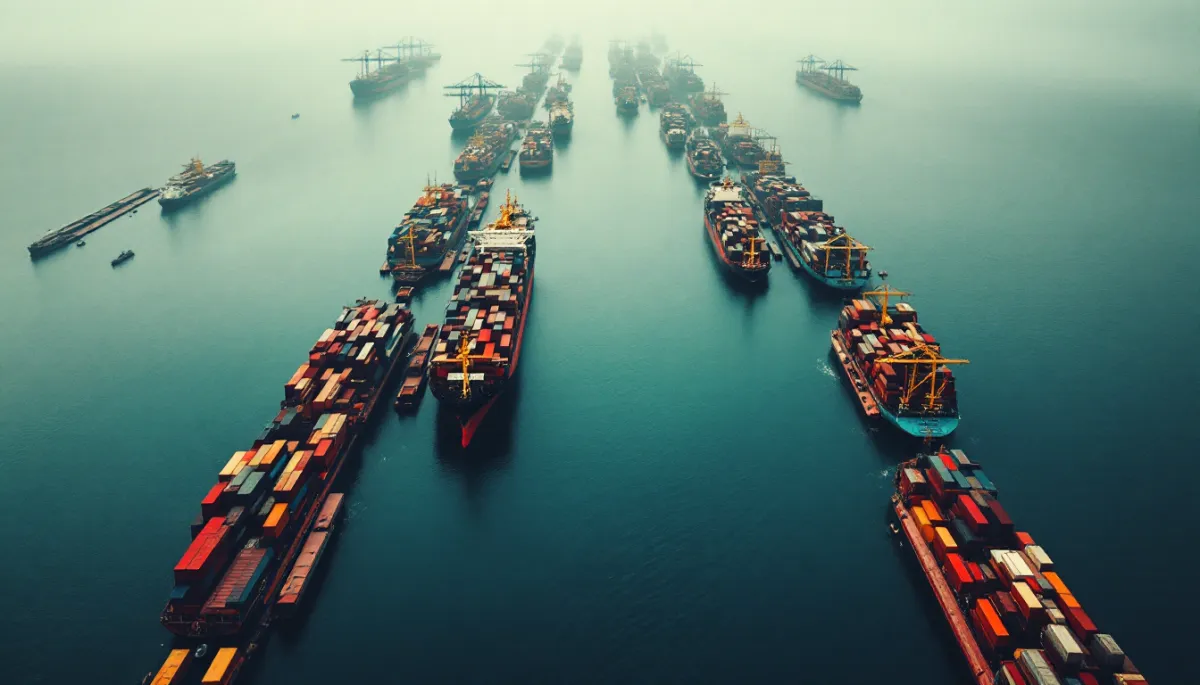
The ceasefire was announced on April 8 and markets celebrated. The S&P 500 jumped 2.9%. Brent crashed 13%. The VIX collapsed. The assumption was clear: Hormuz is reopening and oil is coming back. Three days later, the numbers tell a different story. Only 19 vessels have transited the Strait of Hormuz since the ceasefire began. The pre-war daily average was 100+. An estimated 2,000 ships and 20,000 seafarers remain stranded in the Persian Gulf. The strait is open on paper and closed in practice. For expats whose portfolios rallied on the ceasefire news, the gap between market pricing and operational reality is where the risk lives.
Key Takeaways
- Only 19 vessels have transited the Strait of Hormuz since the April 8 ceasefire, against a pre-war daily average of 100+. The strait is functionally closed.
- Iran requires vessels to coordinate with its armed forces for safe passage and has proposed a fee arrangement the US has not accepted.
- Approximately 2,000 ships and 20,000 seafarers remain stranded in the Persian Gulf, creating insurance, shipping cost, and goods-price pressure across Asia.
- Markets have priced in a resolution that has not happened. The April 22 ceasefire expiry is the next hard catalyst for repricing.
Why Is the Strait Still Closed If There Is a Ceasefire?
The ceasefire suspended US bombing and Iran agreed to allow safe passage, but Iran insists vessels must coordinate with its armed forces and has proposed charging a fee for transit, an arrangement the US has not accepted. VP Vance led direct talks with Iran's Parliament Speaker Ghalibaf in Islamabad on April 10 but no concrete reopening framework emerged. Vance warned explicitly: "If they're going to try to play us, they're going to find that the negotiating team is not that receptive."
The UAE's oil CEO confirmed the strait is not functionally open. Kpler, the cargo tracking firm, recorded only 2 tankers transiting in the first 24 hours after the ceasefire. The IMO estimates 2,000 ships and 20,000 seafarers remain stranded. This is not a maritime technicality. It is a supply chain blockade operating under the label of a ceasefire.
The distinction matters for expats watching their portfolio values. The S&P 500 rallied 2.9% on ceasefire day. Nikkei jumped 4.5%. Kospi surged 8.1%. These moves priced in a reopening that has not materialised. If the Islamabad talks produce no concrete framework in the next 72 hours, the market is trading on a narrative that does not match the shipping data.
What Iran Actually Controls
The Strait of Hormuz is approximately 21 miles wide at its narrowest point. Roughly 20% of the world's oil supply passes through it daily. Iran's naval forces control the northern channel. By requiring coordination for safe passage, Iran has effectively converted a free international waterway into a tollbooth. This is not a new strategy. It is the operational consequence of a ceasefire that gave Iran control rather than restoring freedom of navigation.
How Does the Shipping Standstill Affect Goods Prices in Asia?
The 2,000 stranded vessels represent delayed cargo across every category: oil, LNG, manufactured goods, raw materials, and food supplies. Southeast Asia's import-dependent economies are downstream of this bottleneck. Even goods not transiting Hormuz directly are affected by rerouting, insurance repricing, and shipping capacity being absorbed elsewhere.
Singapore, as the world's second-busiest port by cargo tonnage, is directly exposed. The stranded vessels represent significant insurance claims for Singapore-based marine insurers. Shipping rates for alternative routes around the Cape of Good Hope add 10-14 days and $1-2 million per voyage in additional fuel costs. These costs pass through to consumer goods prices within 30-60 days.
For an expat in Singapore spending SGD 8,000/month on household goods, the shipping cost transmission adds an estimated 2-4% to imported goods within the next quarter. That is SGD 160-320/month, which compounds on top of the energy cost increases already hitting electricity bills.
Thailand and the Philippines: Double Exposure
Both countries are net oil importers and significant goods importers. Thailand's manufacturing sector depends on just-in-time components from the Gulf region and beyond. The Philippines imports a substantial portion of its food staples. The shipping standstill adds a second inflationary channel beyond energy: the cost of everything that arrives by sea, which for island and peninsular economies, is nearly everything.
For expats in Bangkok or Manila, the price increases from the shipping disruption are less visible than a petrol price spike but more persistent. Grocery bills, restaurant costs, and household goods all contain a shipping cost component that adjusts with a lag.
What Are Markets Actually Pricing In?
Markets are pricing in a successful resolution by April 22. The VIX at 19.49 (down 17.5% from pre-ceasefire levels) and Brent at $97 (down 13% from the $110 peak) both reflect optimism that the talks will produce a reopening framework. If this assumption proves wrong, the repricing will be abrupt.
The S&P 500 at 6,825 is trading near its ceasefire-rally high. The Nikkei at 55,895 and Kospi both surged on the same optimism. Gold at $4,747 has partially unwound its geopolitical risk premium. All of these positions are vulnerable to a single catalyst: the ceasefire expiring on April 22 without a functional reopening.
For expats with equity-heavy portfolios, this creates an asymmetric risk. If resolution happens, markets stay roughly where they are or drift modestly higher. If resolution fails, the VIX gap from 19 back to 30+ and Brent from $97 toward $120+ creates a portfolio drawdown that could take months to recover from. The correct response is not to sell, but to ensure your portfolio is structured to absorb the shock rather than concentrated in the assets most exposed to it.
The Volatility Gap
The VIX at 19.49 is below its long-term average of approximately 20. During the peak of the Hormuz crisis, it hit 31. The compression from 31 to 19 happened in days. If the ceasefire collapses, the expansion from 19 back toward 30+ happens in hours. Expats who rebalanced or deployed capital during the ceasefire rally captured a genuine opportunity. Those who increased concentration in equities at the rally peak are exposed to a rapid reversal.
How Should Expats Position for the April 22 Deadline?
Do not try to time the outcome. Structure your portfolio to handle both scenarios. This means ensuring you have adequate cash reserves (6-12 months of expenses), geographic diversification beyond US equities, and currency hedging awareness for your specific earning-spending-saving combination.
If you are 100% in equities and 100% in USD-denominated assets, you are making a directional bet on both the ceasefire succeeding and the dollar maintaining its rate-hold premium. That is a concentrated position dressed up as a default allocation. True diversification covers asset class, geography, currency, and time horizon.
The April 22 deadline is not a reason to change your long-term strategy. It is a reason to verify that your long-term strategy is actually long-term and not a collection of short-term positions you have not reviewed since the crisis began.
What to Review Before April 22
Three questions every expat should answer before the deadline: (1) Do I have 6-12 months of expenses in accessible cash? (2) Is my equity exposure diversified across regions, or concentrated in US tech? (3) Am I running currency mismatches between my income, spending, and savings that I have not actively managed? If any answer is no, the next 11 days are your window to address it. Not by panicking. By structuring.
What Happens to Expat Retirement Plans If the Crisis Extends?
A prolonged Hormuz closure extends the period of elevated costs, compressed risk appetite, and delayed rate cuts, all of which affect the retirement timeline for expats in their 40s and 50s. The Fed is locked at 3.50-3.75%. Goldman's September cut call is at risk. If oil stays elevated through Q2, the entire 2026 rate cut narrative shifts to 2027.
For an expat planning to retire in 10-15 years, a 6-month extension of elevated costs reduces annual investable surplus by 3-5%. Compounded over a decade, that is not a rounding error. It is the difference between retiring at your target number and working an additional 2-3 years.
The retirement planning implication is not to stop investing. It is the opposite. The expats who maintained their investment discipline through the 2022 rate hike cycle, through COVID, through every prior crisis, are the ones whose compounding curves recovered. The ones who paused, waited for clarity, and restarted late are the ones still catching up.
Frequently Asked Questions
Q: How many ships are stranded in the Persian Gulf right now?
A: The IMO estimates approximately 2,000 ships and 20,000 seafarers are currently stranded. Only 19 vessels have transited the Strait of Hormuz since the April 8 ceasefire began, against a pre-war daily average of 100+.
Q: When will the Strait of Hormuz fully reopen?
A: The ceasefire window closes approximately April 22. If the Islamabad negotiations produce a concrete reopening framework, full transit could resume within days. If talks collapse, the strait could remain contested indefinitely. No concrete framework has emerged as of April 11.
Q: How does the shipping standstill affect Singapore specifically?
A: Singapore is directly exposed as a major shipping hub. Marine insurers face claims from stranded vessels. Shipping costs for rerouted cargo add $1-2 million per voyage. These costs pass through to consumer goods prices within 30-60 days. Electricity bills are also rising due to LNG supply constraints.
Q: Should I sell my equities before April 22?
A: No. Timing geopolitical events is a losing strategy. Ensure your portfolio is diversified across asset classes, geographies, and currencies. Maintain 6-12 months of cash reserves. The correct response to uncertainty is structure, not liquidation.
Q: How does this affect the Fed's rate decision?
A: The shipping standstill keeps oil and goods prices elevated, which feeds into US headline inflation (March CPI was +0.9%). This makes rate cuts less likely in 2026. The Fed's April 28-29 FOMC meeting will almost certainly hold rates at 3.50-3.75%.
Q: What is the worst-case scenario for oil prices?
A: Goldman Sachs' escalation scenario has Brent exceeding its 2008 all-time high of $147/bbl. That scenario assumed Hormuz closure alone. With the East-West pipeline also struck, the supply picture is worse than Goldman's base case. Pre-war Brent was approximately $73.
Related Reading
- The ceasefire clock: why expat portfolios face a 22 April deadline
- Oil crashed 13% in one day: what it means for expats in Asia
- Your life has 5 time zones. Your money shouldn't.
- 5 biggest money mistakes that are killing your wealth
The gap between what markets believe and what ships are actually doing is where your risk sits right now. If you have not reviewed your portfolio structure since this crisis began, the next 11 days are the time to do it.
Book a no-obligation call with Ciprian
This content is for informational purposes only and does not constitute personalised financial, investment, or tax advice. By reading this post, you agree to our disclaimer.