Iran's 'Hormuz Safe' Bitcoin Insurance: The Sanctions Risk SE Asian Expats Aren't Watching
Iran's Ministry of Economy introduced "Hormuz Safe" on May 18, a Bitcoin-backed maritime insurance scheme designed to cover Iranian shipping companies transiting the Strait of Hormuz without relying on London, Zurich, or New York-based marine insurers. The scheme targets $10 billion in annual revenue. Any vessel that insures under this programme faces US secondary sanctions exposure under existing Treasury Department frameworks. Lloyd's of London and most European marine insurers have already suspended Iran-related transit coverage. For expats in Southeast Asia, the downstream effect is not about owning Bitcoin. It is about supply chain costs, import prices, and the structural elevation of living expenses across the region for as long as the blockade remains institutionalised.
Last updated: 19 May 2026
Key Takeaways
- Iran's "Hormuz Safe" BTC-backed insurance scheme, launched May 18, targets $10bn in annual revenue by bypassing Western maritime insurers — any Asian vessel using it faces US secondary sanctions exposure.
- The scheme signals Tehran is building permanent economic infrastructure around the blockade, not preparing to concede.
- Southeast Asian shipping companies that handle Iran-adjacent cargo face new compliance pressure, adding friction and cost to regional supply chains.
- For expats in Malaysia, Singapore, and Thailand, the effect is higher import costs and elevated living expenses as maritime insurance fragmentation compounds the existing Hormuz disruption.
What Is the "Hormuz Safe" Scheme and How Does It Work?
Iran's Ministry of Economy launched "Hormuz Safe" on May 18, a Bitcoin-denominated maritime insurance programme that covers Iranian vessels transiting the Strait of Hormuz without using London or Zurich-based marine underwriters. The scheme is designed to generate $10 billion or more in annual revenue by creating a parallel insurance infrastructure entirely outside Western financial markets.
The mechanics: Iranian shipping companies pay premiums in Bitcoin, receive coverage for hull, cargo, and liability risks on Hormuz transits, and avoid any transaction running through USD-correspondent banking, SWIFT, or Lloyd's syndicates. For Iran, the model removes the last lever Western sanctions had over its maritime activity: the ability to deny insurance to vessels carrying Iranian cargo.
For anyone else — particularly Asian shipping companies and port operators — the scheme creates a binary compliance problem. Interacting with "Hormuz Safe" in any capacity triggers secondary sanctions exposure under the US Treasury's Office of Foreign Assets Control. OFAC secondary sanctions apply to non-US entities that materially support sanctioned programmes. An Asian logistics company that uses "Hormuz Safe" to cover a single transit risks losing access to USD correspondent banking entirely.
Why Does This Matter for Southeast Asian Shipping and Supply Chains?
The Hormuz Safe scheme splits global maritime insurance into two parallel markets: Western-compliant coverage and BTC-denominated coverage that carries US sanctions risk. The bifurcation adds friction to every cargo movement that passes through or near the Gulf, regardless of which market a vessel uses.
Asian shipping companies that have been handling Iran-adjacent cargo under quiet commercial arrangements now face explicit regulatory scrutiny. The launch of a named, publicly reported scheme changes the risk calculus from informal exposure to documented interaction. Companies operating out of Singapore, Malaysia, and Thailand that handle transhipment cargo from Gulf origins are reviewing their exposure.
The Transhipment Risk for Singapore and Port Klang
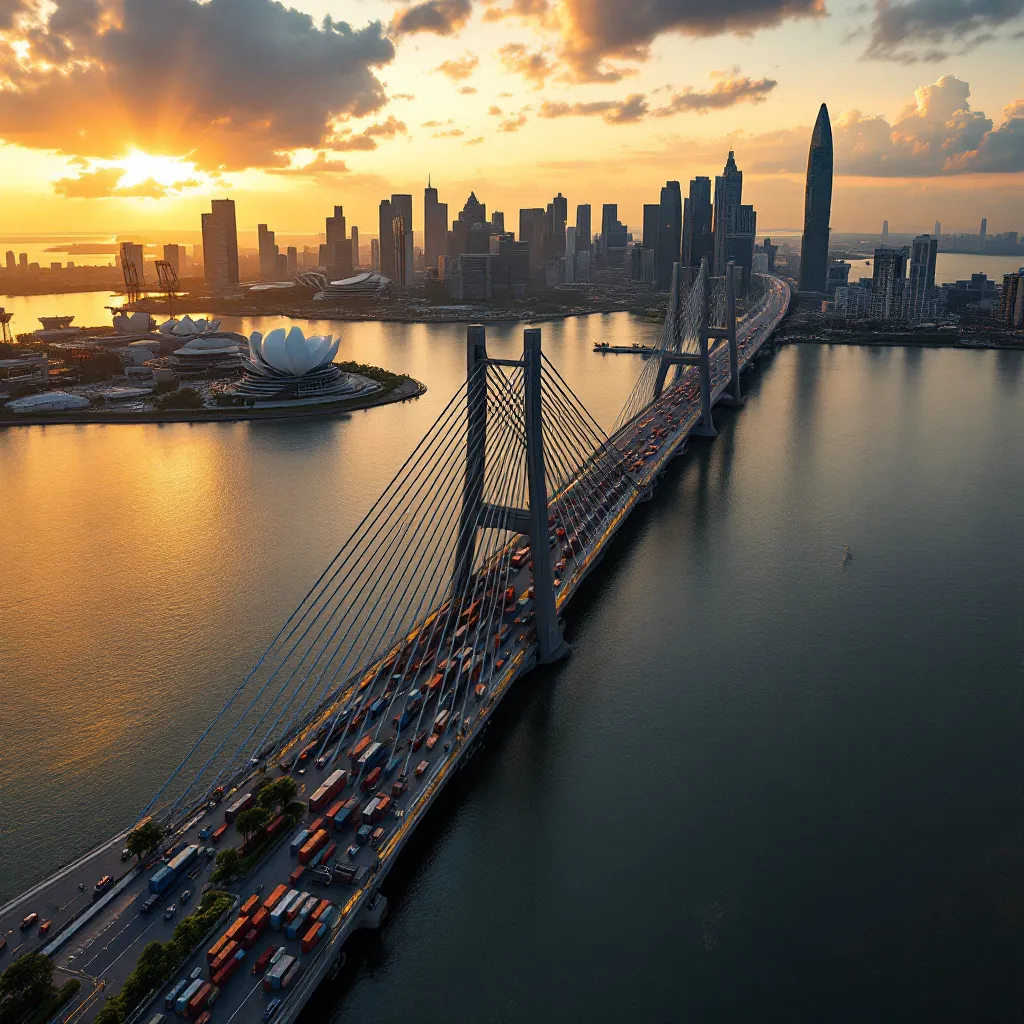
Singapore is the world's second-largest container port. Port Klang is Southeast Asia's largest. Both handle significant volumes of transhipment cargo. Some of that cargo originates in Gulf ports now operating under Hormuz Safe coverage or informal BTC-insurance arrangements. The question for port operators is whether handling that cargo constitutes "material support" under OFAC definitions.
The answer is not yet settled in US regulatory guidance. That uncertainty itself raises the cost of compliance: companies hire legal advisors to assess exposure, tighten documentation requirements, and in some cases reject Gulf-origin cargo entirely. Every one of those friction points raises costs, and costs pass through to import prices.
What Does an "Institutionalised Blockade" Mean for Expat Cost Planning?
Iran's launch of a revenue-generating insurance scheme around the Hormuz blockade signals that Tehran views the closure as a permanent economic asset, not a temporary negotiating position. The Strait has been at 5% of normal traffic since March. April logged 191 vessel transits against a pre-war average of roughly 4,000 per month, according to IEA oil market tracking.
A blockade that generates $10 billion in annual insurance revenue has a financial incentive structure to remain in place. Iran does not earn that revenue by reopening Hormuz. This changes the planning horizon for expats from "when does this end?" to "what does the cost structure look like if this continues through 2027?"
For residents of Malaysia, Singapore, and Thailand, the supply chain cost premium embedded in imported goods is structural. Higher fuel costs, higher shipping insurance premiums, longer routing via Cape of Good Hope alternatives, and reduced cargo frequency all feed into retail prices for food, electronics, consumer goods, and industrial inputs. The insurance market fragmentation adds a second cost layer on top of the volume shock from the ongoing Hormuz closure.
How Does This Affect Expat Investment Portfolios in the Region?
The most direct portfolio effect of the Hormuz Safe scheme is on Southeast Asian companies with Gulf supply chain exposure. Logistics companies, consumer goods importers, and manufacturers relying on Gulf-origin raw materials face both higher costs and higher compliance risk.
For expats holding Malaysian or Singaporean equities through regional UCITS funds, the Hormuz Safe bifurcation adds sector-level risk to logistics, shipping, and distribution businesses. Companies that have managed to keep costs stable during the first months of the blockade face a new complication: the insurance market they relied on may no longer cover Gulf-adjacent routes at reasonable premiums, and the alternative market carries sanctions exposure.
More broadly, the structural case for elevated oil costs in 2026 is strengthened by this scheme. Oil demand in Southeast Asia is not falling. It is being rerouted, re-insured, and repriced. All three processes cost money, and that cost sits in the regional inflation baseline.
For expat portfolios built around Irish-domiciled UCITS funds with global equity exposure, the Hormuz Safe scheme adds an indirect inflation signal: the cost of doing business across the Gulf is rising structurally, not cyclically.
What Are the Compliance Risks for Expats with Business Interests in the Region?
Expats who own or operate businesses in Southeast Asia with supply chain exposure to the Gulf should review their commercial contracts for any interaction with Iran-adjacent insurance or shipping arrangements. The Hormuz Safe scheme is named, documented, and publicly reported. OFAC secondary sanctions apply to knowing or intentional interaction.
The practical steps are straightforward. Review any freight contracts covering Gulf-origin cargo and confirm the insurance arrangements used by your carriers do not include Hormuz Safe or similar BTC-based schemes. Confirm that your Malaysian or Singaporean banking relationships have received guidance on how to handle payments to or from Gulf logistics companies transitioning to BTC-denominated insurance. If your business imports raw materials or consumer goods from Gulf origins, document the insurance chain on those shipments.
The MAS has published guidance on targeted financial sanctions compliance for Singapore-based businesses. A well-documented compliance trail is substantially better than an undocumented one if OFAC scrutiny increases.
Frequently Asked Questions
Q: Does "Hormuz Safe" mean I should buy Bitcoin?A: No. The scheme uses BTC as a settlement mechanism between Iranian entities. For expats in Southeast Asia, the relevant consideration is the secondary sanctions exposure to Asian companies in your supply chain or investment portfolio, not a reason to hold BTC.
Q: How does this affect the price of imported goods in Malaysia and Singapore?
A: It adds friction on top of existing Hormuz-driven cost increases. Insurance market bifurcation raises compliance costs for carriers, which pass through to freight rates, which pass through to import prices. The effect is incremental rather than sudden, but it compounds with the existing oil price premium.
Q: Are Malaysian and Singaporean banks at risk from the Hormuz Safe scheme?
A: Banks that process payments to or from entities using Hormuz Safe coverage face secondary sanctions risk. Malaysian and Singaporean regulators have been active in issuing OFAC compliance guidance. The practical effect is tighter documentation requirements on Gulf-origin transactions, not a systemic banking risk.
Q: What does this mean for my expat portfolio diversification?
A: It adds a compliance-risk layer to logistics and distribution companies in Southeast Asian equity markets. For investors holding regional ETFs or individual equities in the logistics sector, reviewing Gulf supply chain exposure in the underlying holdings is a reasonable step.
Q: How long is the Hormuz Safe scheme likely to operate?
A: As long as the blockade generates more revenue than Iran could gain by lifting it. At $10 billion in annual insurance revenue, the scheme creates a structural incentive to maintain the closure. Planning horizons should extend to 2027 at minimum.
Q: Does the Hormuz situation affect pension decisions for British expats?
A: Indirectly. Hormuz-driven inflation compresses real purchasing power across Southeast Asia, which raises the income required from any pension drawdown to maintain a given standard of living. The scheme entrenches that inflation dynamic rather than resolving it.
Related Reading
- Why $100+ oil is the structural planning baseline for expats in 2026
- How Middle East conflict is reshaping energy costs for expats in Southeast Asia
- Think you're diversified? Why regional equity exposure in Asia has changed
- Trump's NSC Iran decision and what each outcome means for expat portfolios
The Hormuz Safe scheme is a sanctions architecture story with direct implications for supply chain costs, inflation baselines, and compliance risk across Southeast Asia. If you hold regional equities, run a business with Gulf supply chain exposure, or are reviewing the real-terms value of a pension drawdown in a higher-cost environment, the structural implications of an institutionalised blockade belong in your planning framework. Book a no-obligation call with Ciprian
This content is for informational purposes only and does not constitute personalised financial, investment, or tax advice. By reading this post, you agree to our disclaimer.