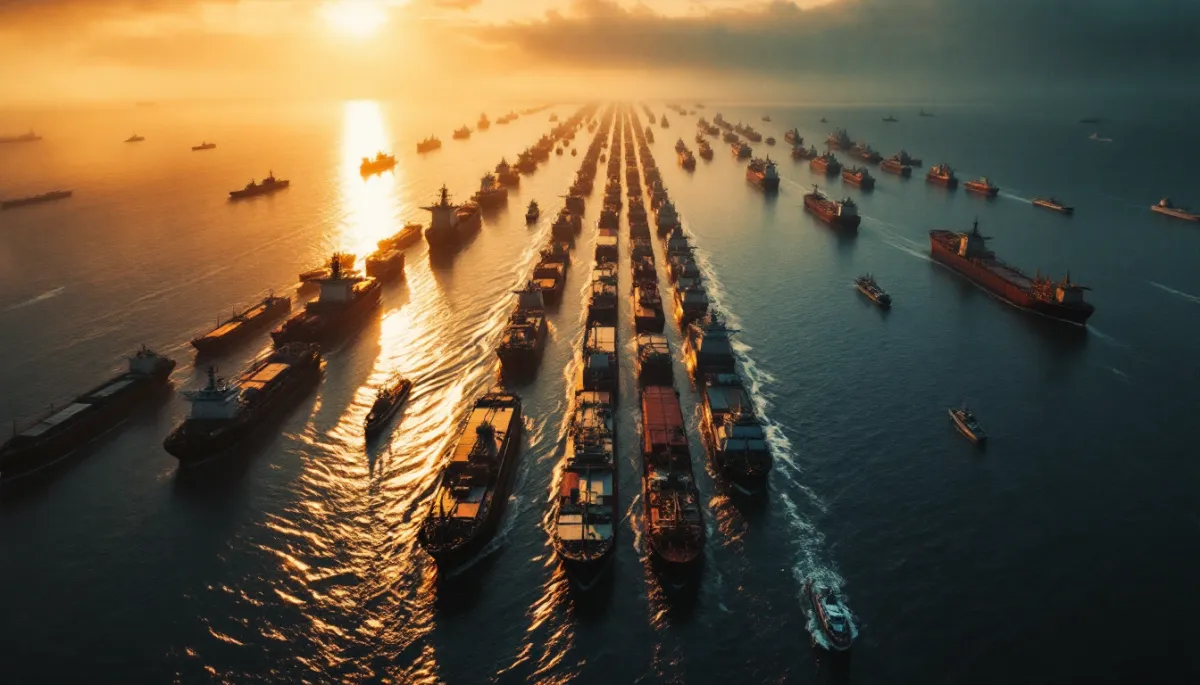
Iran's Hormuz Toll Booth: What Gulf-Based Expats Need to Know in 2026
Most expats in the Gulf think about the Hormuz crisis as a news event. It is not. It is a direct threat to the economic infrastructure that pays your salary, funds your employer, and underpins the region's stability. Iran's selective passage system through the Strait of Hormuz has cut effective oil throughput from 21 million barrels per day to an estimated 8-12 million, and it is collecting an estimated $50 million per day in transit fees. If you work in oil and gas, banking, or professional services in the UAE, Saudi Arabia, or Qatar, your income and your portfolio are exposed to the same risk. That is the definition of correlated risk, and it demands a structured response.
Key Takeaways
- Gulf-based expats face correlated risk: their income, employer stability, and regional economy all depend on the same energy infrastructure now under direct threat.
- Iran's "toll booth" system has reduced Hormuz throughput by 40-60%, with 72-120 hour transit delays and an estimated $50M/day in Iranian toll revenue.
- A 40-nation naval coalition is positioning forces over the next 6-8 weeks, creating a binary escalation risk.
- Expats whose portfolios are also concentrated in energy or regional assets have no diversification against the scenario that most threatens their employment.
What Exactly Is Iran's "Toll Booth" Strategy?
Iran has implemented a selective passage pricing system through the Strait of Hormuz that allows allied vessels (Chinese, Russian, and partner nations) to transit while imposing severe delays and costs on Western commercial shipping. This is not a complete blockade. It is a calibrated economic weapon.
The system creates 72-120 hour delays for transiting vessels. Effective daily throughput has dropped from approximately 21 million barrels per day to an estimated 8-12 million. Reports suggest Iran is collecting approximately $50 million per day through this mechanism, creating a revenue stream that funds continued enforcement.
For context, approximately 21% of global oil transit passes through Hormuz on a normal day. The current bottleneck has pushed Brent crude to $109-110 per barrel, a 60% increase from the pre-conflict baseline of roughly $68. This is not a temporary spike. The infrastructure for sustained disruption is now in place.
Why Is This Different from Previous Hormuz Tensions?
Previous threats to close Hormuz were rhetorical. This is operational. Iran has moved from threatening disruption to implementing a functioning revenue system. The shift from "we could close it" to "we are charging tolls" represents a fundamentally different posture, one that is harder to reverse because Iran now has a financial incentive to maintain it.
How Does This Affect Expat Employment in the Gulf?
If you work in oil and gas, banking, logistics, or professional services in the Gulf, your employer's revenue is directly tied to the energy flows that Iran is now restricting. This creates a form of concentration risk that most expats do not account for in their financial planning.
Oil and gas companies in the UAE, Saudi Arabia, and Qatar derive revenue from production and export. When transit costs rise and throughput falls, margins compress. Some companies will delay expansion projects. Others will restructure headcount. The 2015-2016 oil price collapse led to significant expat layoffs across the Gulf, and that was driven by oversupply, not a physical blockade.
The current situation is structurally different because it combines price elevation with supply uncertainty. Companies cannot simply pump more oil if they cannot ship it efficiently.
What About Non-Energy Sectors?
Banking, construction, hospitality, and professional services in the Gulf are all derivative of energy revenue. When oil revenue contracts or uncertainty rises, government spending slows, project timelines extend, and hiring freezes follow. If you think you are diversified because you work in finance rather than oil, think again. In the Gulf, almost every sector traces back to energy.
What Is the 40-Nation Naval Coalition and Why Does It Matter?
A UK-led coalition of over 40 nations is coordinating a joint task force to establish a "safe passage" corridor through the Strait, with full operational positioning expected in 6-8 weeks. This is the key variable for escalation risk.
If the coalition attempts forced passage, the probability of direct military engagement with Iran rises sharply. Intelligence assessments suggest any direct confrontation would trigger an immediate $15-25 per barrel spike in oil prices and significant regional currency weakness.
Conversely, if negotiation signals emerge, particularly through UNSC talks or mediation by Oman or Kuwait, the downside toward $100 per barrel accelerates. The GCC states (Saudi Arabia, UAE, Kuwait) are actively pressing the UN Security Council for international sanctions on Iran and naval protection guarantees.
For expats, the 6-8 week timeline is critical. This is the window during which the situation either de-escalates through diplomacy or escalates through military confrontation. Your financial planning should account for both scenarios.
How Should Gulf Expats Assess Their Personal Risk Exposure?
Start by mapping every source of income, savings, and investment exposure to the Gulf energy economy, then ask yourself what happens to each one if oil transit disruptions last 3-6 months.
Most Gulf-based expats have the following concentration:
- Salary paid by a Gulf employer (income exposure)
- End-of-service gratuity held by the employer (counterparty exposure)
- Savings in a local bank account (currency and jurisdiction exposure)
- Investment portfolio potentially overweight energy or regional markets
If all four are tied to the same regional economy, you have no diversification against the scenario that most threatens your financial life. Your life has five time zones, and your money should reflect that reality.
What About End-of-Service Benefits?
In the UAE and Saudi Arabia, end-of-service gratuity is an employer obligation, not a segregated fund. If your employer faces financial distress from sustained energy disruption, your gratuity is an unsecured claim. For long-tenured expats, this can represent a significant sum. Treating it as guaranteed wealth is a planning error during periods of employer stress.
What Portfolio Adjustments Make Sense Right Now?
The priority is reducing correlation between your income source and your investment portfolio, not making directional bets on oil prices.
If your salary comes from the Gulf energy economy, your portfolio should be deliberately uncorrelated to it. That means:
Geographic diversification. Ensure your investments are spread across regions that do not depend on Gulf energy revenue. European, Asian, and North American markets provide genuine diversification. A globally diversified portfolio is not a luxury for Gulf expats. It is a structural necessity.
Currency diversification. If you earn in AED or SAR (both pegged to USD), holding investments denominated in GBP, EUR, or other currencies provides a hedge against the scenario where USD strength driven by energy prices works against your spending needs elsewhere.
Asset class diversification. Bonds, particularly short-duration or inflation-linked, provide ballast when equity markets price in geopolitical risk. Cash and short-duration positions still yield reasonably at current rates.
Liquidity. Ensure you have 6-12 months of living expenses accessible outside the Gulf banking system. This is not alarmist. It is basic contingency planning for anyone living in a region experiencing active geopolitical disruption.
What Is the Timeline Expats Should Watch?
The next 72-96 hours will reveal whether Iran is willing to negotiate. The next 6-8 weeks will determine whether the naval coalition triggers escalation or deters further disruption.
Key dates and signals:
- Any UNSC emergency session or Oman/Kuwait mediation announcement signals de-escalation
- Coalition naval assets reaching operational threshold (estimated 6-8 weeks) is the next escalation trigger
- OPEC+ silence on production increases suggests tacit support for elevated prices
- Any direct coalition-Iran military engagement triggers immediate price spike and regional instability
For expats, the actionable window is now. Restructuring a portfolio or building liquidity buffers takes weeks to implement. Waiting for the situation to resolve before acting means acting too late if it escalates.
Frequently Asked Questions
Q: Are Gulf expat jobs at immediate risk from the Hormuz crisis?
A: Not immediately, but the risk rises with duration. If disruptions persist beyond 8-12 weeks, expect hiring freezes and project delays in energy-dependent sectors. The 2015-2016 oil downturn led to significant expat redundancies across the Gulf.
Q: Should I move my savings out of Gulf bank accounts?
A: Consider maintaining 6-12 months of expenses in accounts outside the Gulf as a liquidity buffer. This is prudent contingency planning, not a prediction of banking instability. Gulf banks remain well-capitalised, but geographic diversification of cash holdings reduces single-jurisdiction risk.
Q: How does the AED/SAR dollar peg affect my exposure?
A: The peg means your currency moves with the USD. During energy crises, the USD tends to strengthen (risk-off flows), which benefits your purchasing power abroad. But if your spending is in GBP or EUR for obligations back home, a strong USD helps. The risk is if the peg comes under pressure in an extreme scenario, which is unlikely but not impossible.
Q: Is my end-of-service gratuity safe?
A: End-of-service gratuity is an employer obligation, not a segregated or insured fund. If your employer faces financial distress, it is an unsecured claim. For significant accumulated gratuity, discuss the risk with a cross-border financial planner who understands Gulf employment structures.
Q: Should I increase my gold allocation as a hedge?
A: Gold provides a non-correlated hedge against geopolitical uncertainty. Current prices reflect a safe-haven bid. The case for a modest allocation (5-10% of portfolio) as structural diversification is sound, but chasing gold at elevated prices as a tactical trade is different from holding it as a permanent portfolio component.
Q: What happens if the coalition forces a passage through Hormuz?
A: Intelligence assessments suggest a direct confrontation would trigger a $15-25/barrel oil price spike and significant regional currency weakness. For Gulf-based expats, this is the escalation scenario that demands the most preparation: liquidity buffers, portfolio diversification, and contingency plans for potential relocation.
Related Reading
- How petrol prices in Southeast Asia are being reshaped by the Middle East conflict
- Why thinking you are diversified may be the biggest risk in your portfolio
- Your life has five time zones, and your money should reflect that
- The biggest money mistakes that quietly erode your wealth
If the Hormuz crisis has you reconsidering how much of your financial life is concentrated in one region, a structured review of your income exposure, portfolio allocation, and liquidity position can help you build resilience before the next escalation.
Book a no-obligation call with Ciprian
This content is for informational purposes only and does not constitute personalised financial, investment, or tax advice. By reading this post, you agree to our disclaimer.