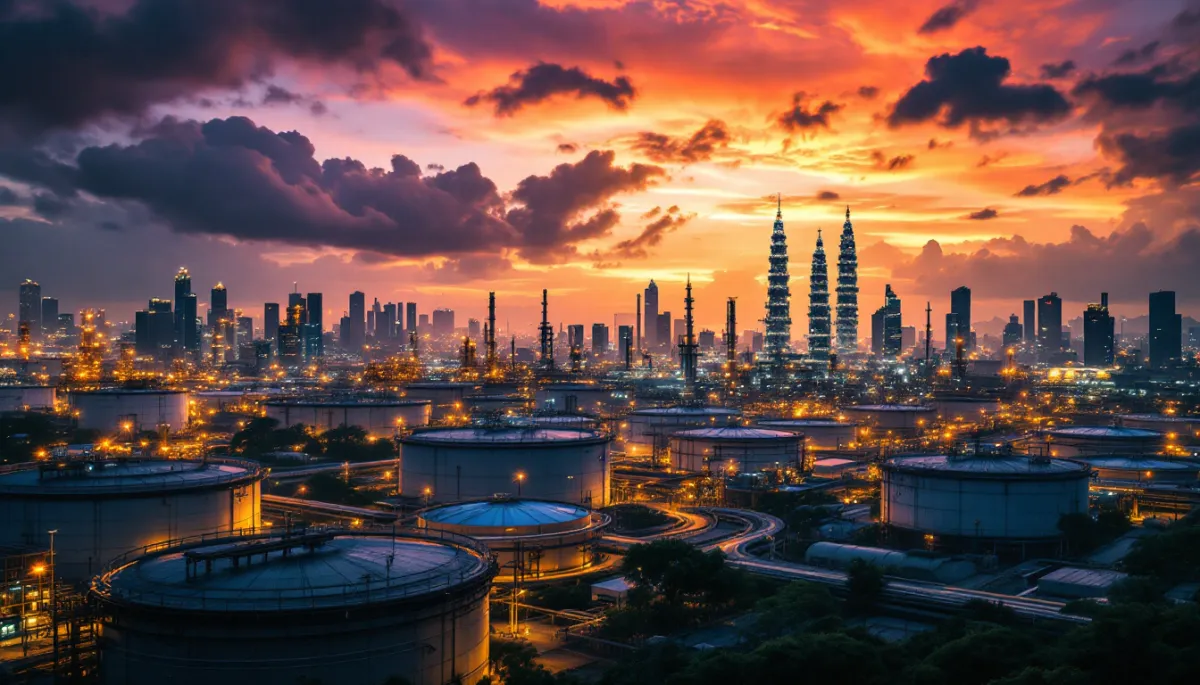
Malaysia's Oil Supply Runs Out in May: What Expats Must Know
Malaysia's hydrocarbon reserves could run dry by May 2026. That figure comes from the government's own assessment, not a worst-case projection. With roughly half of the country's crude oil supply stranded or delayed by the Hormuz Strait blockade, the effects are already visible: fuel quotas slashed, subsidies ballooning from RM700 million to RM3.2 billion monthly, and a GDP growth forecast that assumes supply lines reopen within 60 days. For European expats living and working in Kuala Lumpur, the impact is direct, touching your cost of living, your employer's operating costs, and the currency you are paid in.
Key Takeaways
- Malaysia's oil reserves may deplete by May 2026 if alternative supply is not secured within 30 days
- The government has cut RON95 fuel quotas from 300L to 200L per citizen per month
- Monthly fuel subsidy costs have jumped 4.5x to RM3.2 billion, straining public finances
- Expats should review their currency exposure, liquidity buffers, and remittance schedules now
How Did Malaysia's Oil Supply Reach Crisis Point?
Malaysia lost access to roughly 50% of its crude oil supply when Iran closed the Strait of Hormuz to Western commercial traffic on 2 March 2026. The country is a net oil exporter, but its refining capacity depends on imported crude blends that transit the Strait. When those shipments stopped, strategic reserves became the backstop.
The government now estimates those reserves will last only until May. Prime Minister Anwar Ibrahim has pledged to keep RON95 petrol at RM1.99 per litre, but the subsidy arithmetic has changed dramatically. Monthly costs have ballooned from RM700 million to RM3.2 billion, a 4.5x increase that the treasury cannot sustain indefinitely.
Bank Negara Malaysia raised its GDP growth forecast to 4-5% for 2026. That number assumes the Hormuz Strait reopens within 60 days. If it does not, the forecast unravels.
What Has the Government Done So Far?
The most visible measure is the RON95 fuel quota reduction from 300 litres to 200 litres per citizen per month. This is rationing in all but name. The government has also signalled it is negotiating alternative crude supply contracts, though no confirmed deals have been announced.
Why 30 Days Matters
May is not a soft deadline. If Malaysia cannot secure alternative crude before reserves deplete, the options narrow to forced currency devaluation, capital controls, or emergency borrowing. Malaysia imposed capital controls during the 1998 Asian financial crisis under similar external pressure. The precedent exists, and the playbook is known.
What Does Fuel Rationing Mean for Expats in Kuala Lumpur?
The immediate impact is higher transport and logistics costs, even if pump prices remain capped. The RM1.99 RON95 cap applies only to Malaysian citizens and permanent residents. Expats on work permits already pay market rates for RON97, which tracks global crude prices more closely.
Beyond fuel, the supply chain effects are materialising. Freight costs for consumer goods have risen. Food prices in KL's wet markets and supermarkets are creeping up as transport margins compress. If you are an expat household spending RM8,000-15,000 per month in Kuala Lumpur, expect a 10-15% increase in your grocery and transport bill over the next 60 days. [Inference]
The work-from-home directive issued by the Malaysian government (covered in our earlier post on Malaysia's WFH directive and what it signals) is directly linked to this energy conservation effort. If your employer has not already shifted to hybrid arrangements, expect it soon.
Could Malaysia Impose Capital Controls?
Capital controls are not the base case, but they are no longer implausible. The 1998 precedent, when then-PM Mahathir Mohamad pegged the ringgit and restricted capital outflows, is the reference point every institutional investor in KL is watching.
The trigger would be a simultaneous depletion of oil reserves and a run on the ringgit. The MYR is currently holding at approximately 4.04 against the USD, supported by oil export revenues. If those revenues collapse because Malaysia cannot process crude, the currency loses its fundamental support.
For expats with MYR-denominated savings or EPF balances, capital controls would mean restricted ability to remit funds abroad. If you earn in MYR and have financial obligations in GBP, EUR, or AUD back home, this scenario deserves attention now, not after it happens.
What Should Expats Do About Currency Risk?
If you hold significant MYR cash balances beyond your immediate living expenses, consider whether that concentration is appropriate. This is not a call to panic-sell ringgit. Currency diversification is risk management for anyone whose income, expenses, and obligations span multiple currencies.
How Does This Affect Expat Employers in Malaysia?
Companies operating in Malaysia face rising input costs, potential power rationing, and workforce disruption. The energy crisis extends beyond petrol. Natural gas prices are surging in tandem, affecting manufacturing, data centres, and commercial real estate cooling costs. For more on this, see our coverage of the natural gas crisis hitting Southeast Asia.
For expats employed by multinationals in KL, the risk is indirect but real. If your employer's Malaysian operations become materially more expensive, headcount decisions follow. Oil and gas professionals are somewhat insulated by the sector's own revenue dynamics, but tech workers, banking staff, and professional services employees face a different calculus.
This is the correlated risk that portfolio theory alone does not address. Your income and your local economy are moving in the same direction. If both deteriorate simultaneously, your financial plan needs a buffer that is not tied to the same currency or country.
What Should Expats in Malaysia Do Right Now?
Review your liquidity, your currency exposure, and your exit logistics. The window to prepare is measured in weeks, not months.
Check your cash reserves. Three to six months of living expenses in a stable currency (USD, GBP, EUR, SGD) held outside Malaysia, separate from your EPF balance. If your entire liquid position is in MYR, that is a concentrated bet on Malaysia's near-term stability.
Review your remittance schedule. If you regularly send money home to service a mortgage or savings commitment in Europe, consider whether front-loading a transfer at current MYR rates makes sense. The ringgit at 4.04 per USD is near its strongest level in years, per IMF exchange rate data. That may not hold if reserves deplete.
Understand your employer's contingency plan. Ask directly whether your company has assessed the impact of sustained energy costs on Malaysian operations. If they have not, that tells you something.
Revisit your portfolio structure. An expat in KL with 100% of their income, savings, and investments in MYR-denominated assets is running a concentrated bet on one country's near-term stability. Diversification across jurisdictions and currencies is the structural hedge. For a broader perspective on how long-term positioning protects against short-term shocks, see our analysis of why market volatility can work in an expat's favour.
Frequently Asked Questions
Q: Will RON95 petrol prices increase in Malaysia?
A: The government has pledged to maintain the RM1.99 cap, but the subsidy cost has jumped from RM700 million to RM3.2 billion monthly. If reserves deplete before alternative supply is secured, the subsidy becomes unsustainable. A price increase or further rationing is likely by mid-2026.
Q: Can expats still buy RON95 fuel in Malaysia?
A: RON95 is subsidised for Malaysian citizens and permanent residents. Expats on work permits typically use RON97, which is not price-capped and already reflects global crude price movements.
Q: Should I move my savings out of Malaysia?
A: That depends on your total financial picture. If a large proportion of your liquid assets are in MYR and your obligations are in other currencies, reviewing that concentration is prudent. Capital controls remain unlikely but are no longer impossible.
Q: How does the Hormuz crisis affect Malaysia specifically?
A: Approximately 50% of Malaysia's crude oil supply transits the Strait of Hormuz. The blockade since 2 March has stranded those shipments, forcing the country to draw down strategic reserves that may last only until May 2026.
Q: What happens if Malaysia runs out of oil reserves?
A: The government would face a choice between forced currency devaluation, capital controls, emergency borrowing, or a combination. Power rationing for non-essential commercial use would likely precede any of those measures. For context on how the broader region is handling the energy emergency, see our post on the Philippines' energy emergency declaration.
Q: Is Malaysia still a good place for expats financially?
A: Malaysia remains one of Southeast Asia's most cost-effective bases for expat professionals. The current energy crisis is a supply-side shock, not a structural collapse. The 30-day window is critical. If supply is secured, the medium-term picture stabilises. Review your own financial plan to make sure it accounts for this uncertainty.
Related Reading
- How the Hormuz crisis is reshaping expat currencies across Asia
- The natural gas crisis hitting expat costs across Southeast Asia
- Petrol prices in Southeast Asia and how the Middle East conflict affects expats
- Why waiting until your 50s to plan for retirement could cost you seven figures
If the Malaysia energy situation has you rethinking your financial structure, that instinct is worth following up on. A 30-minute conversation can clarify whether your currency exposure, liquidity, and portfolio are positioned for what comes next.
Book a no-obligation call with Ciprian
This content is for informational purposes only and does not constitute personalised financial, investment, or tax advice. By reading this post, you agree to our disclaimer.