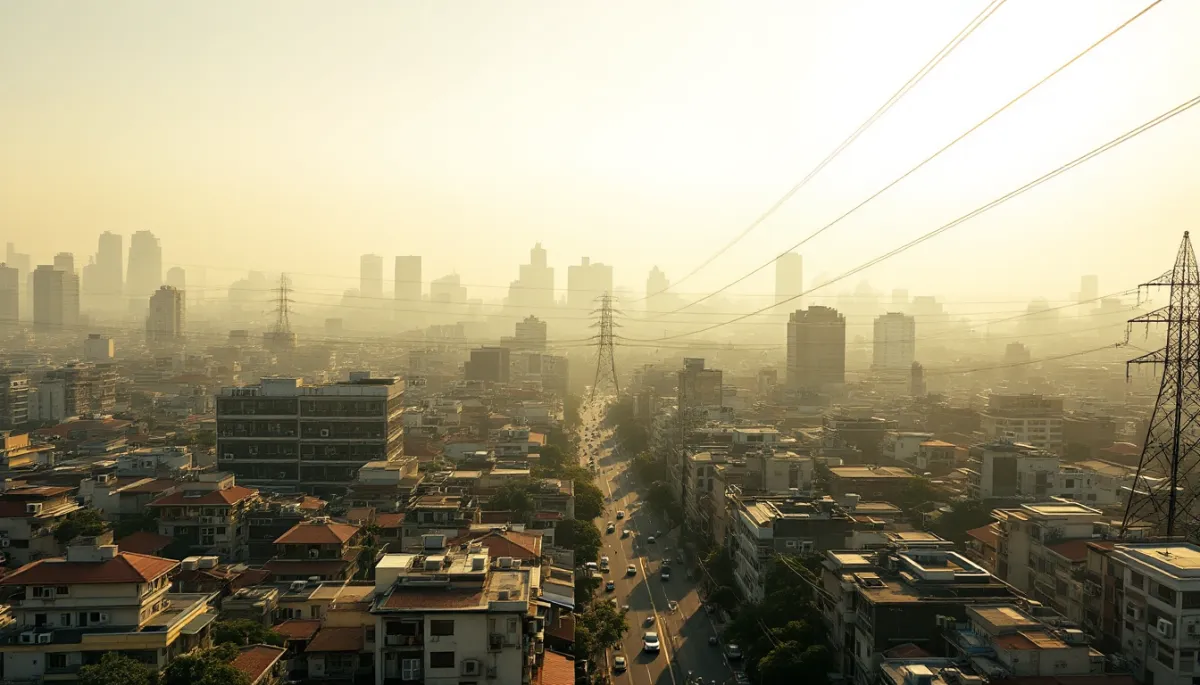
Southeast Asia's Heatwave Meets the Energy Crisis: The Double Cost Shock for Expats in 2026
Air conditioning in Malaysia is not a luxury. At 38 degrees with sustained humidity, it is a physiological necessity. That matters financially right now because Malaysia is under a Level 2 heatwave alert, with temperatures between 37 and 40 degrees Celsius forecast through early June in Kedah and Perlis. Meanwhile, Thailand has banned most oil exports to protect domestic supply. And across the region, LNG supply is constrained at exactly the moment electricity demand is surging. For expats in Southeast Asia, this is not two separate problems. It is a single compressed cost shock hitting from both sides at once, with higher demand driving up bills at the same time as supply constraints drive up the cost of the gas that generates the electricity.
Key Takeaways
- Malaysia is under a Level 2 heatwave alert (37-40°C sustained through early June), creating a demand surge for electricity precisely when LNG supply is constrained and import costs are rising.
- Thailand has banned oil exports except to Cambodia and Laos, reflecting acute domestic supply pressure as one of Southeast Asia's most oil-import-dependent economies.
- EU buyers and Asian buyers are competing for the same constrained LNG spot pool, with the EU's April 25 ban on Russian short-term contracts tightening the market further.
- Expats in Malaysia, Thailand, and Singapore should build elevated utility costs into Q2 and Q3 2026 budget assumptions, as the demand and supply pressures compound rather than offset each other.
Why Is Southeast Asia Facing a Heatwave Right Now?
The region is entering its hottest months under a sustained heatwave alert that coincides with, and compounds, an energy supply crisis that was already severe before the temperatures started climbing.
Malaysia's Meteorological Department issued a Level 2 heatwave alert for Kedah and Perlis, with sustained temperatures between 37 and 40 degrees Celsius forecast through early June. Level 2 means the conditions are serious enough to affect health, infrastructure, and energy systems. In the context of the ongoing Hormuz disruption and LNG supply constraints, it means air conditioning demand is rising in the worst possible supply environment.
Thailand is experiencing similar heat pressure. As a net oil importer, Thailand is among the most exposed ASEAN economies to sustained energy disruption. The government responded by banning oil exports except to Cambodia and Laos, a sign that domestic supply security is now the explicit priority. When a government restricts exports of a commodity its own economy depends on, the message about domestic supply tightness is unambiguous.
What Level 2 Means in Practical Terms
A Level 2 heatwave alert in Malaysia triggers advisory measures across sectors, including increased electricity usage warnings and reminders about grid capacity. For expats living in KL, Penang, or anywhere in the north, it means air conditioning runs longer and at lower thermostat settings. Office buildings, shopping malls, and residential buildings all increase their cooling load.
That increased load hits the grid at precisely the moment it is most expensive to supply. Peninsular Malaysia's electricity generation relies substantially on natural gas. Natural gas is priced off LNG spot markets. LNG spot markets are currently experiencing a supply crunch driven by the Hormuz disruption, Qatar's Ras Laffan impairment, and the upcoming EU April 25 ban on Russian LNG short-term contracts.
The Regional Heat Pattern
The heatwave is not isolated to Malaysia. Thailand, Vietnam, Cambodia, and parts of Indonesia are all experiencing above-average temperatures in this period. El Niño aftermath and regional weather patterns align to produce these conditions in April and May. The difference in 2026 is that the heat is arriving while the region's energy supply infrastructure is already under maximum stress.
What Is Driving LNG Supply Constraints in the Region?
Southeast Asia is caught between three simultaneous LNG supply disruptions: the Hormuz crisis restricting Gulf exports, Qatar's Ras Laffan terminal operating at reduced capacity, and the EU April 25 deadline forcing European buyers into the same Asian spot market that regional utilities rely on.
LNG is the critical energy input for power generation across Malaysia, Singapore, and Thailand. It is also the fuel that has no clean substitutes on short notice for grid-scale electricity production. When LNG supply tightens, utility operators face a choice: pay more for spot cargoes, reduce generation, or draw down emergency reserves. All three options have cost implications for end consumers.
The Hormuz disruption directly affects LNG exports from Qatar and the UAE, the primary sources for Southeast Asian buyers on long-term contracts. Ras Laffan, Qatar's main LNG export terminal, was impaired in February and has not returned to full capacity. Qatar handles roughly 21% of global LNG supply. Partial impairment at Ras Laffan removes significant volume from the market at a time when the region can least absorb it.
The EU April 25 Deadline and Its Asian Knock-On Effect
The EU's December 2025 agreement to ban Russian short-term LNG contracts takes effect on April 25, thirteen days away. European utilities that have relied on Russian LNG for short-term flexibility are now competing for the same spot cargoes that Asian utilities need. Bloomberg has reported that European and Asian spot buyers are already competing for the same limited cargo pool.
This is not an abstract supply chain issue. It translates directly into the marginal cost of electricity generation. When utility operators pay more for LNG, those costs appear in electricity tariffs on a lagged basis. For expats receiving utility bills in Q2 and Q3, the April-May spot LNG competition between EU and Asian buyers will be embedded in those bills.
Singapore's Exposure as a Refining and Import Hub
Singapore's electricity market is directly linked to LNG import prices through its market structure. As the region's major refining and distribution hub with almost no domestic energy resources, Singapore passes LNG cost changes through to commercial and residential consumers with relatively limited buffering. The heatwave demand surge compounds an already elevated import cost baseline.
How Does the Heat-Energy Overlap Affect Expat Budgets Directly?
For expats in the affected countries, this is a cost of living problem, not an abstract energy market problem. Higher air conditioning usage plus higher electricity generation costs equals a materially larger utility bill, arriving at the same time as food and transport costs remain elevated from the Hormuz energy shock.
The compounding dynamic works simply. Normal heatwave conditions increase electricity consumption by 15 to 25% for a typical expat household in Malaysia or Singapore running central air conditioning. At the same time, the marginal cost of electricity generation is rising because LNG spot prices are elevated. Multiply higher usage by higher unit cost and the bill increase is not additive. It is multiplicative.
For a household that spent 400 to 600 MYR per month on electricity in 2025, a 20% consumption increase combined with a 15% tariff increase would push that to 550 to 830 MYR. That is a 35 to 40% increase in a single line item of the household budget. Extrapolated across Q2 and Q3, the cumulative difference from 2025 baseline is not trivial for a family living on a USD or GBP salary with MYR costs.
Transportation and Food Cost Layers
The heatwave affects more than electricity. Malaysia's heatwave alerts flag agricultural impact in northern states. Kedah and Perlis are the country's rice basket. Sustained temperatures above 38 degrees damage rice crops, which adds food cost pressure on top of the energy shock. Imported food costs are already elevated from the Hormuz-driven logistics premium.
Transportation costs remain sticky at elevated levels. Diesel at 6.02 MYR per litre in early April reflects the sustained physical crude premium. That cost is embedded in every delivery, every logistics operation, and every food product that travelled to your local supermarket. The heatwave does not directly increase fuel costs, but it compounds the overall cost pressure on a budget that already carries the Hormuz premium on every transport-linked item.
Health Costs and IPMI Implications
Sustained extreme heat increases health risk. Heat-related illness, dehydration, and cardiovascular stress are real medical risks at 38 to 40 degrees. For expats with international private medical insurance, this is worth noting: higher health system utilisation during a heatwave can increase claim frequency. For those without comprehensive IPMI coverage, direct medical costs from heat-related illness are a live financial risk.
Healthcare costs across the region are already under upward pressure from other policy developments. The heatwave adds a usage-driven layer on top of the structural cost increase.
How Exposed Are Different Countries to This Double Shock?
Malaysia, Thailand, and Singapore face the heatwave-energy overlap in meaningfully different ways, and your specific cost exposure depends on which country you are in and how your accommodation, utility contracts, and employment situation work.
Malaysia is partially cushioned by its net oil exporter status and PM Anwar's toll-free Hormuz passage for Malaysian-flagged vessels. The government has more fiscal room to maintain fuel subsidies than Thailand does. But LNG import costs for electricity generation are rising regardless, and the heatwave is concentrated in the north. KL-based expats are at the lower end of the temperature range but not outside it.
Thailand's situation is more acute. As a net oil importer with oil export restrictions now in place, Thailand is managing domestic supply security under heat stress. The Thai baht has been under pressure from the broader regional energy shock, adding a currency dimension to the cost increase for expats earning in stronger currencies who hold THB-denominated expenses.
Singapore's electricity market structure means cost changes pass through to consumers relatively quickly. The MAS-regulated financial environment provides institutional resilience, but electricity tariffs are market-driven. The combination of LNG spot pressure and heatwave demand increase will appear in Singapore bills on a faster timeline than in markets with more state-directed pricing.
How Should Expats Adjust Their Financial Plans for Q2 and Q3?
The practical response is not complex. Raise your utility cost assumption, review your emergency liquidity, and check whether your investment structure is appropriately positioned for a cost of living environment that is higher than 2025 baseline on multiple dimensions simultaneously.
For budgeting, use a 30 to 40% increase in electricity costs as your Q2 planning assumption. That is the reasonable upper end of the compounding effect of increased demand and increased generation cost. If actual bills come in lower, you have budget headroom. If they come in at the top of the range, you have planned for it.
Emergency liquidity matters more in this environment than in a stable cost period. The combination of elevated energy costs, food price pressure, and travel cost inflation means your monthly outflow is higher than your 2025 budgets assumed. If your liquid cash reserve was sized for 2025 costs, it is now smaller in real terms. Three to six months of actual current expenses, not 2025 expenses, is the right target.
For the investment structure, the principle that market volatility is a long-term investor's advantage holds. But in the short term, higher cost of living means higher cash flow requirements, which can pressure investment contributions if you have not budgeted correctly. Protecting your ability to maintain investment contributions through a high-cost quarter is more valuable than chasing returns during the same period.
The broader point is that the heatwave-energy double shock is a planning event, not a financial crisis, if you have anticipated it. A forward-looking financial plan builds in cost shock scenarios and maintains enough structural flexibility that a difficult quarter does not require liquidating investments or abandoning long-term goals. If your plan does not have that flexibility, this is the moment to build it.
Frequently Asked Questions
Q: How long will the Southeast Asia heatwave last in 2026?
A: Malaysia's Level 2 heatwave alert covers Kedah and Perlis through early June. Regional weather patterns suggest elevated temperatures across Malaysia, Thailand, and parts of Indonesia through May and into early June. The overlap with constrained LNG supply is most acute in April and May as the EU April 25 deadline triggers competitive spot buying.
Q: Will electricity tariffs actually increase in Malaysia and Singapore?
A: Tariff adjustments lag spot market changes by weeks to months depending on the regulatory framework. Malaysia's government has tools to cushion residential tariffs through subsidies, but utility operators' underlying cost of generation is rising. Singapore's market-linked tariffs typically adjust quarterly. Q2 tariff announcements for both countries are the ones to watch.
Q: Is Thailand safe for expats during the current energy and heat situation?
A: Thailand's oil export ban reflects domestic supply tightness, not an imminent supply emergency. Expats in Bangkok and major cities will see higher living costs, but infrastructure stability is not at risk. The heat is a health concern at sustained 38-40°C. Standard precautions, hydration, and limited outdoor exposure in peak hours apply.
Q: How does the EU LNG ban affect Asian expats?
A: The EU's April 25 ban on Russian short-term LNG contracts forces European utilities into the Asian spot LNG market, increasing competition for the same cargo pool that Southeast Asian utilities rely on. This pushes Asian LNG spot prices higher, flowing through to electricity generation costs and, with a lag, utility tariffs for residential consumers.
Q: Should expats in Malaysia move their savings out of MYR because of the energy situation?
A: Currency decisions should be based on your overall financial structure, not a single cost shock. The MYR has weakened from 3.92 to approximately 4.20 against the USD since January. If you have excess MYR savings beyond local spending needs, reviewing your currency allocation is sensible. For living expenses, MYR remains the functional currency for KL-based costs.
Q: How does the heatwave affect international school fees and expat education costs?
A: Most international schools in Malaysia and Singapore have long-term energy contracts that buffer short-term spot price movements. However, schools with high cooling costs that run on quarterly or annual energy reviews may pass through increases in the next fee revision. Worth checking whether your school's energy costs are part of ancillary fee structures rather than headline tuition.
Related Reading
- Why Malaysia's toll-free Hormuz deal creates an energy cost asymmetry with Singapore
- Singapore's LNG exposure and why expat electricity bills are already rising
- The natural gas crisis and the hidden cost threat for expats across the region
- How to future-proof your financial plan against repeated cost shocks
The heatwave and the energy crisis are compressing two separate cost pressures into the same quarter. If your financial plan was built for 2025 conditions, it needs an update. If you want to review your budget assumptions and investment structure against this cost environment, book a no-obligation call with Ciprian.
This content is for informational purposes only and does not constitute personalised financial, investment, or tax advice. By reading this post, you agree to our disclaimer.