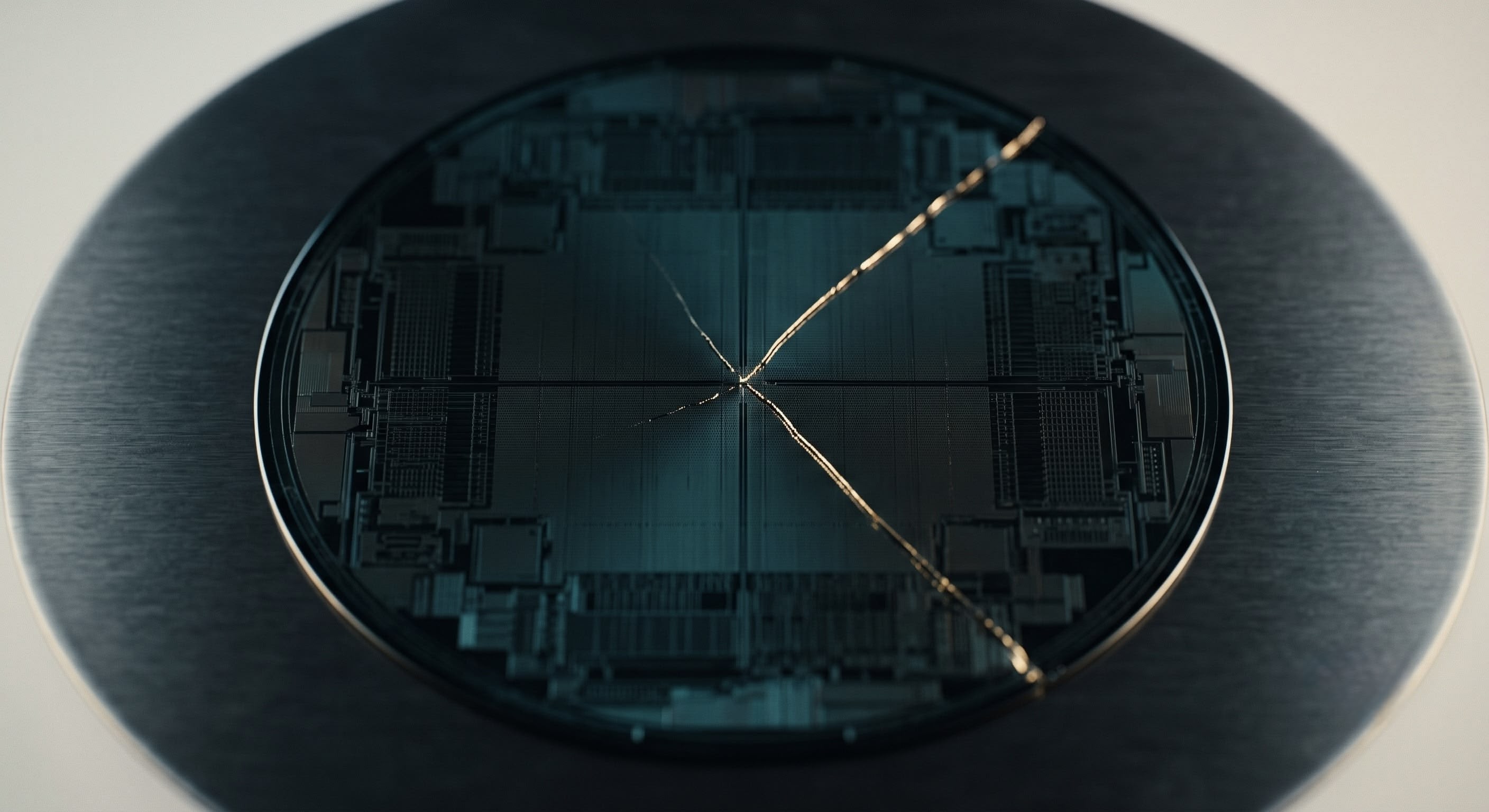
If you checked your portfolio app in the last two weeks and flinched at the tech-heavy slice, you weren't imagining it. Chip stocks just had their worst month since the 2008 crash. One of the world's biggest banks told its clients the sell-off is the moment to add, not the moment to run.
The Big Story: Your Tech Stocks Just Had Their Worst Month Since 2008. JPMorgan Says Buy More.
A German engineer in Singapore holds company shares from his bonus and a QQQ-heavy pension sleeve, a common expat setup. His July statement was ugly, and kept getting worse through the month.
The chip index fell around a fifth in July, its worst month since the 2008 crash, wiping out more than two trillion dollars in value. The trigger was a Chinese AI lab, Moonshot AI, releasing a model called Kimi K3 that performed close to the best Western systems at a fraction of the assumed cost. If a cheaper model can do the job, why is Silicon Valley planning to spend hundreds of billions building bigger ones? Investors sold first and asked questions later.
In the first days of August, JPMorgan told clients the questions had been answered: the sell-off was a buying opportunity, time to add. The underlying AI spending plans hadn’t moved; only the price had, and price is what fear distorts fastest.
For anyone holding RSUs, a tech-tilted pension, or a “growth” sleeve holding five large US names, this is the scenario a diversified structure is built to survive without a panic decision. The same correction inside a single-sector bet is a crisis instead of an event, decided months before the sell-off, not during it.
What Else Is Moving
The Fed split three ways for the first time in a decade. The Fed held its benchmark rate on 29 July, but 9-3, with three policymakers dissenting for a hike, the first three-way dissent pulling one direction since 2016. The statement dropped its usual forward guidance, a sign even the Fed can’t agree what’s next.
Oil’s price is calm. The shipping lanes aren’t. Brent crude ended July near where it started, after a spike above $90 and a partial retreat. That calm number hides an uglier trend: over a dozen merchant ships have been damaged around the Strait of Hormuz since February. A planned US strike on Iran was called off 1 August over “progress in talks”; the same weekend, a tanker was hit near the strait’s entrance.
Two numbers went back to normal. Gold sat flat around $4,000 an ounce for a fourth straight week, still not behaving like a safe haven this year. UK borrowing costs eased off their highest level since 2008 while the pound rose alongside them, the usual relationship reasserting itself after two volatile weeks.
The real test lands Friday. The US jobs report for July is due 8 August, the first to catch a month where oil spiked and chip stocks crashed. A soft number strengthens the case for a Fed cut later this year; a strong one keeps hike talk alive into September.
The Expat Takeaway
A lot of this month’s news was built to make you feel like you’d missed something: a sector fell hard, a central bank looked divided, a war kept not ending. None of it, alone, is reason to touch a portfolio built for a decade, not a headline cycle.
Three questions worth sitting with. Does your equity exposure behave differently across sectors and regions, or is most of it one bet on a handful of US tech names wearing different tickers? If you hold RSUs or options from a tech employer, does your broader portfolio offset that concentration, or double down on it? And when a month like July happens again, do you have a rule for adding, or just a habit of watching?
The constructive read is the one JPMorgan gave its own clients: broad, fear-driven sell-offs in structurally sound sectors are usually where the next decade’s returns get built, not lost. If your structure already reflected that, this was a month to watch, and maybe to add to. If it didn’t, the lesson was never really about chips.
Until next week.
Cip | Bratu Capital
Managing wealth for globally mobile professionals across Southeast Asia.