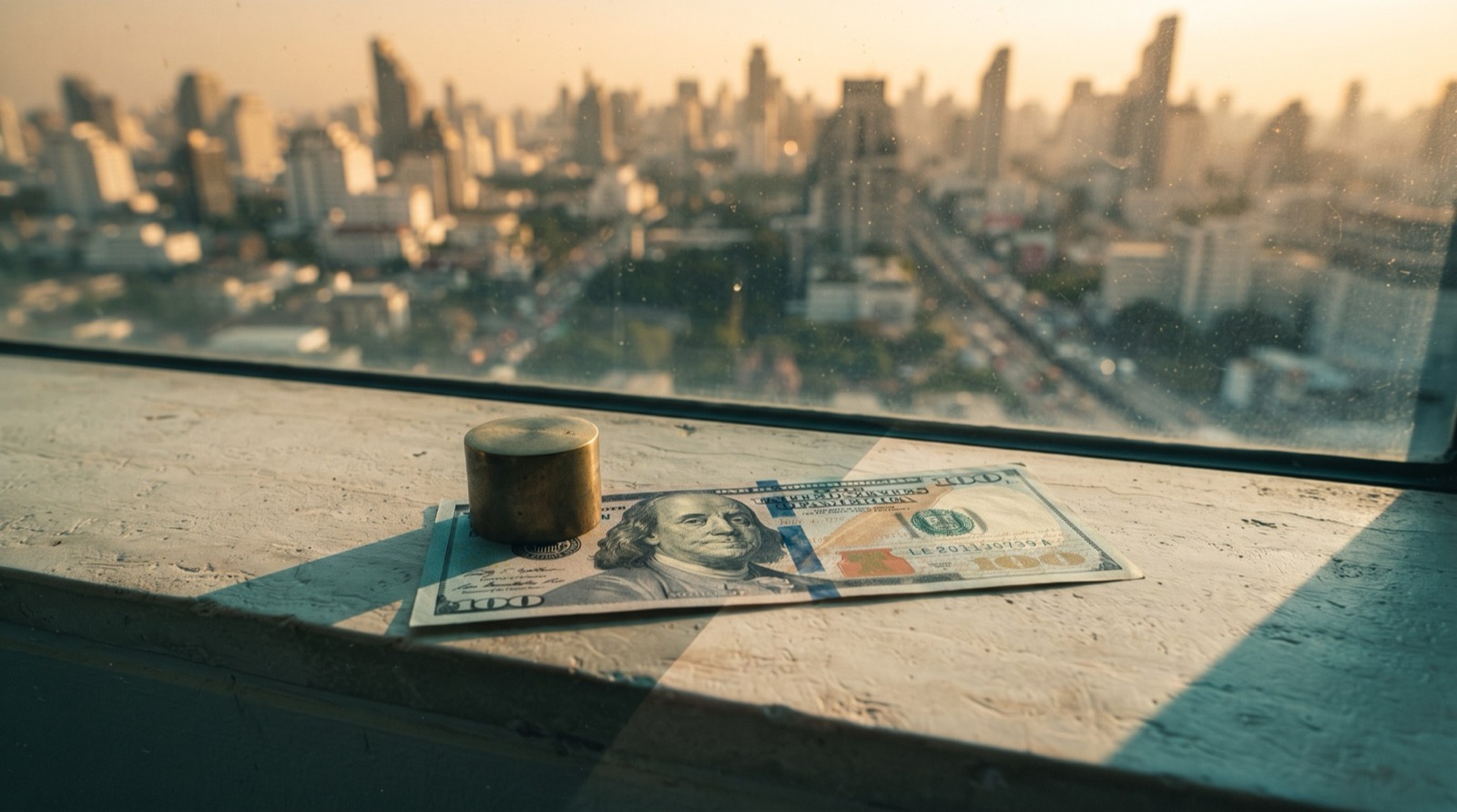
If you have money sitting in a bank account waiting for a calmer moment, prices outran it again this month. The bond sell-off, meanwhile, has pushed the income on offer elsewhere to its highest in nearly two decades.
The Big Story: The Money In Your Bank Account Lost Ground Again
Javier is a Spanish drilling engineer in Bangkok, 58, and paid in dollars. Three years of bonuses sit in his dollar account, waiting for markets to feel safer. He thinks of it as the safe part of his money.
Prices in America rose 3.4% in the year to August. The average US savings account pays 0.37%, and a one-year deposit 1.73%, according to the US deposit insurer, the FDIC. On $200,000, that gap costs Javier about $6,000 of buying power a year at this year’s inflation, without a single bad day on the stock market.
The bond sell-off behind this week’s headlines has also raised what the other side of a portfolio pays. A ten-year US government bond yields about 5.2%, close to its highest since 2007, and the UK equivalent sits above 5.3%. A bond held to maturity locks in that rate until it is repaid. A bank can cut a savings rate next month. And stocks rose anyway: the S&P 500 gained about 1.2% in the same week.
For Javier, the decision is where money beyond a six-month cash buffer should sit. A diversified portfolio holds bonds and shares together, in Irish-domiciled funds that reinvest their income automatically, and in the currency he will spend in retirement. It can earn from both sides of a week like this one. If you have money beyond your buffer sitting in a bank account with no plan for it, that is a half-hour conversation. Book a time here.
What Else Is Moving
This week shapes the next Fed decision. Markets price about a two-in-three chance of another US rate rise on 28 October. The Fed’s preferred inflation measure lands on Wednesday, and Friday’s jobs report is expected to show hiring at roughly half of August’s pace.
The Bank of England is two votes from a rise. Three of its nine members voted to raise rates on 17 September. On Thursday two who voted to hold, Deputy Governors Clare Lombardelli and Sarah Breeden, said they are moving closer. “The more sparks we’re throwing in the tinderbox, the more we might have to turn the hose on it,” Breeden said. On Friday Governor Andrew Bailey said high energy prices make holding harder. Markets price a November rise at about three in four.
A Hormuz deal lasted one day. On Friday Iran offered a seven-day plan: frozen funds released, oil sanctions lifted, the US naval blockade ended and the strait reopened. Oil fell on the hope. On Saturday President Trump called it unacceptable, though he expects talks to resume this week. Friday’s oil price was set before the rejection, so today’s trading gives the real verdict.
Malaysian deposits beat inflation, for one cycle. Prices rose 1.9% in the year to August, according to the statistics department. CIMB pays up to 3.75% on new fixed deposits placed by 30 September, and the rate reverts to its standard board rate at renewal. Analysts told The Star the main share index is near oversold after foreign selling linked to high US borrowing costs. The ringgit gained on the dollar for the first time in four weeks. Budget 2027 is tabled on Friday 9 October.
The Expat Takeaway
A lot moved this week, and the portfolios that handle weeks like this were built before it began.
Start with one question: how much of your money sits in cash beyond six months of spending, and what has it earned after inflation this year? Then ask one more. If interest rates fell next year, which part of your money would still be paying you?
If your answers are clear, this is a week to watch. If they are not, the work was never about this week, and bonds have not paid this well since 2007.
Until next week.
Cip | Bratu Capital
Managing wealth for globally mobile professionals across Southeast Asia.