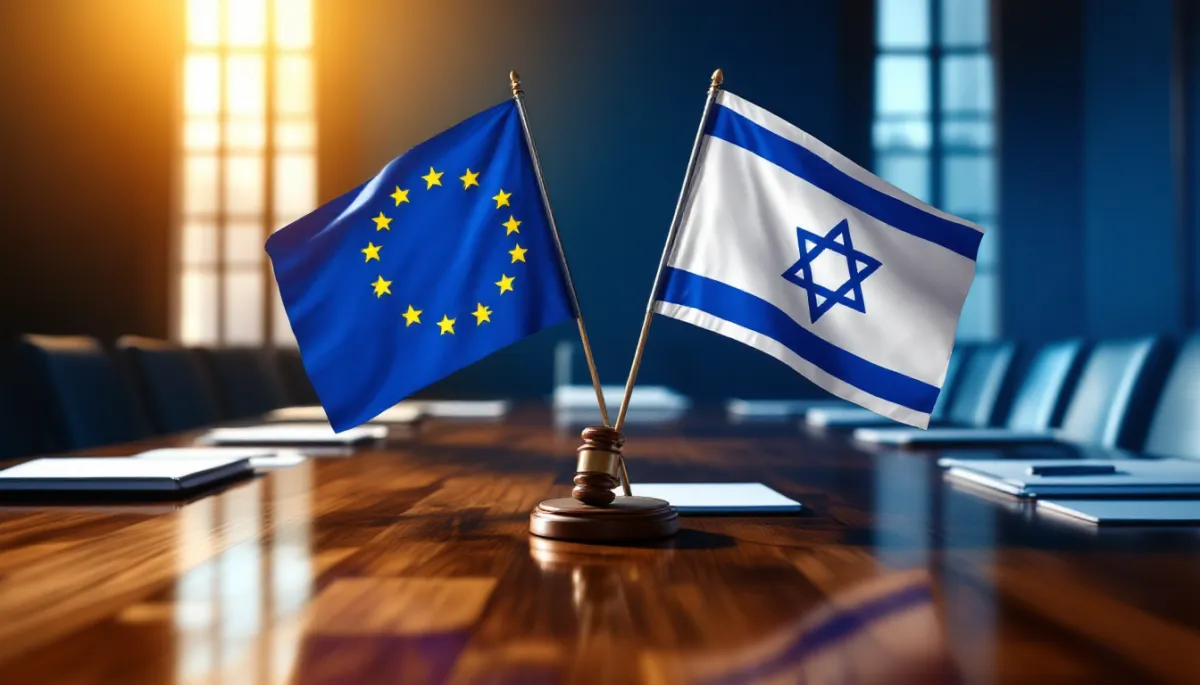
EU Israel Sanctions Vote: What European Expats Must Know
Five EU member states are pushing to suspend the EU-Israel Association Agreement, a trade framework worth approximately €1 billion per year. If the vote passes by qualified majority, it would mark the first time the EU has deployed this mechanism against Israel. For European expats holding Israeli equities, working in sectors tied to EU-Israel trade, or managing EUR-denominated assets, the implications are direct. This post covers what the vote means, which sectors face disruption, and what you should review in your portfolio this week.
Key Takeaways
- The EU is voting on suspending its trade agreement with Israel, which could disrupt tech, pharma, and agricultural trade worth €1bn annually.
- Belgium, Ireland, Malta, Slovenia, and Spain are driving the vote. Hungary's former veto power has been removed.
- Israeli retaliation via tech and pharmaceutical trade restrictions would hit European supply chains and expat employers.
- European expats with Israeli stock exposure or EU trade-linked income should review concentration risk now.
What Is the EU-Israel Association Agreement and Why Does It Matter?
The EU-Israel Association Agreement is a bilateral trade framework that eliminates tariffs on industrial goods, reduces barriers on agricultural products, and facilitates scientific cooperation between the EU and Israel. In force since 2000, the agreement underpins approximately €1 billion in annual trade value for Israel and supports deep integration across technology, pharmaceuticals, and agriculture.
Why the Vote Is Happening Now
Five EU member states — Belgium, Ireland, Malta, Slovenia, and Spain — have formally requested suspension of the agreement. The political dynamic shifted when Hungary's Viktor Orbán left power earlier this year. Orbán had consistently blocked EU action on Israel, vetoing proposals that required unanimity. His departure means the EU Council can now advance the suspension through a qualified majority vote, bypassing the need for unanimous consent.
EU foreign ministers convened in Luxembourg on April 21 to discuss the proposal. The timing is deliberate: the vote comes amid broader geopolitical pressure, with the US-Iran ceasefire collapsing and energy prices surging past $100 per barrel.
What Qualified Majority Means
A qualified majority requires 55% of EU member states representing at least 65% of the EU population. The five sponsoring states already represent a significant bloc, and several additional members have signalled willingness to support the measure. If the resolution passes, it would directly alter trade flows, tariff schedules, and regulatory cooperation between the EU and Israel. For European expats, this is not a symbolic gesture. It would change the cost and legality of cross-border commerce in sectors that employ tens of thousands of Europeans.
Which Sectors Face the Most Disruption?
Technology, pharmaceuticals, and agriculture are the three sectors most exposed to a suspension of the EU-Israel Association Agreement.
Technology
Israel's tech sector exports heavily to the EU, particularly in cybersecurity, artificial intelligence, and semiconductor design. A trade suspension would reintroduce tariff barriers on these goods, raising costs for European firms that depend on Israeli tech suppliers. Israel ranks among the top five countries globally for cybersecurity exports. If Israel retaliates with export restrictions on defence and dual-use technology, European companies with Israeli R&D partnerships could face operational disruption that ripples through to hiring and contract renewals.
Pharmaceuticals
Israel is a significant manufacturer of generic drugs, with Teva Pharmaceutical alone supplying a substantial share of EU generic medication. A trade disruption here would affect drug pricing and availability across European markets. For expats working in pharma — whether based in Europe, Singapore's biotech corridor, or Dubai's healthcare free zones — the supply chain implications extend beyond portfolio exposure to direct employment risk.
Agriculture
Israeli agricultural exports to the EU currently benefit from preferential tariff rates under the Association Agreement. Fresh produce, processed foods, and agricultural technology would lose their pricing advantage overnight. The reverse flow matters equally: EU agricultural equipment exports to Israel would face new barriers, affecting European agri-tech firms with Israeli distribution channels.
How Does This Affect European Expat Portfolios?
If you hold Israeli equities, EU-linked trade stocks, or EUR-denominated assets tied to affected sectors, the vote creates concentration risk you may not have accounted for. Most European expats do not track their Israeli exposure separately. A single holding in a broad UCITS ETF, a legacy stock position, or indirect exposure through a European fund with Israeli allocations can compound quickly when a specific market faces a policy shock.
Start by reviewing your portfolio for direct Israeli equity holdings. Check whether your diversified funds carry meaningful Israeli allocations. The MSCI Israel index represents a small but non-trivial share of several broad emerging market and developed market ETFs. If your allocation to Israeli equities exceeds 2-3% of total portfolio value, the vote outcome becomes a material variable.
The currency dimension matters separately. If the EU suspends the agreement and Israel retaliates, EUR could weaken further against USD and GBP as trade disruption compounds the existing energy-driven pressure on the euro. European expats in Southeast Asia earning in USD or local currencies may find a window to increase EUR allocations at favourable rates. For those sending money home to Europe, the calculus reverses entirely. Your multi-currency structure determines whether this event helps or hurts you.
What Happens if Israel Retaliates?
Israel has historically responded to trade restrictions with targeted countermeasures, and the tech and pharmaceutical sectors are the most likely channels for retaliation. Israeli government officials have previously warned that any EU trade action would trigger a review of Israeli technology cooperation with European partners. Given Israel's position as a major cybersecurity and defence technology exporter, this is a credible threat with material consequences for European firms and their employees.
For expats in the Gulf or Southeast Asia working for European multinationals with Israeli supply chain dependencies, the risk is indirect but concrete. A retaliatory export restriction on Israeli semiconductor components or cybersecurity tools would cascade through European manufacturing and services. The World Bank has flagged trade fragmentation as one of the top risks to global growth in 2026, and this vote would add another fracture line to an already stressed system.
The UK has not aligned with the EU on Israel sanctions. This creates a regulatory divergence: British expats with UK-domiciled investments may face different exposure than French, German, or Dutch expats with EU-domiciled funds. If you hold assets across both jurisdictions, the gap between UK and EU trade policy matters for your portfolio structure more than you might expect. Two portfolios that look identical on paper can behave very differently when one sits under EU trade law and the other under UK regulation.
What Should European Expats Do This Week?
Review your Israeli exposure, check your fund allocations, and assess whether your EUR-denominated assets are concentrated in sectors vulnerable to trade disruption.
Step 1: Audit Israeli Exposure
Pull up your fund fact sheets. Check whether your equity ETFs or UCITS funds hold Israeli stocks. The MSCI Israel index includes companies like Check Point Software, Nice Ltd, and Wix. Even a 2-3% allocation becomes relevant when a trade shock hits that specific market. If you hold sector-specific tech or healthcare ETFs, the Israeli weighting may be higher than you assume.
Step 2: Assess EUR Asset Concentration
If the EU-Israel trade suspension compounds the existing EUR weakness driven by the Russian LNG ban and the Hormuz energy shock, your EUR pension or savings could lose purchasing power against the currencies you actually spend. European expats in Malaysia or Singapore should evaluate whether their EUR holdings are appropriately sized relative to their local spending needs. A 10-15% swing in EUR purchasing power over a quarter is not a theoretical risk right now. It is the range that recent weeks have already delivered.
Step 3: Watch the UK Divergence
The UK's decision not to align on Israel sanctions means UK-domiciled funds and GBP assets may respond differently to the same geopolitical event. If you hold both EUR and GBP assets, the regulatory split could create rebalancing opportunities. Monitor announcements from the FCA on any guidance related to EU-Israel trade disruption.
Your financial structure should account for geopolitical risk at the jurisdiction level, not just the asset level. A portfolio that looks diversified across stocks and bonds may still be concentrated in a single regulatory regime. This is the structural gap that costs expats money when volatility hits without warning.
Frequently Asked Questions
Q: What is the EU-Israel Association Agreement?
A: A bilateral trade framework in force since 2000 that eliminates tariffs on industrial goods, reduces agricultural trade barriers, and facilitates EU-Israel scientific cooperation. It is worth approximately €1 billion annually to Israel and supports significant two-way trade in technology, pharmaceuticals, and agriculture.
Q: Can the EU actually suspend the agreement?
A: Yes. Suspension requires a qualified majority vote (55% of member states, 65% of EU population). With Hungary's veto power removed and five states formally sponsoring the measure, the threshold is achievable. The vote could proceed without unanimity.
Q: How does this affect expats who don't hold Israeli stocks?
A: Indirectly. Trade disruption between the EU and Israel affects European supply chains, particularly in tech and pharma. If you work for a European company with Israeli suppliers, or hold EUR assets sensitive to EU trade policy, the vote is relevant to your financial planning.
Q: Will the UK follow the EU on Israel sanctions?
A: Not yet. The UK has not aligned with the EU proposal. UK-domiciled investments and GBP assets may face different exposure than EUR-domiciled equivalents. British expats should monitor FCA guidance separately.
Q: Should I sell Israeli stocks now?
A: Not necessarily. The vote outcome is uncertain, and selling on speculation often destroys more value than the event itself. Review your concentration risk and ensure Israeli exposure is within your tolerance. If it represents a material portion of your portfolio, reduce to a level you can hold through volatility.
Q: How does this connect to the broader Hormuz crisis?
A: The EU-Israel vote is happening against a backdrop of oil above $100, EUR weakness from the Russian LNG ban, and a collapsing US-Iran ceasefire. Each pressure compounds the others. European expats face simultaneous currency risk, energy inflation, and trade disruption in a single quarter.
Related Reading
- Why thinking you're diversified might be costing you money
- EU's Russian LNG ban and what it means for EUR pension risk
- How market volatility creates hidden retirement advantages for expats
- Building a resilient portfolio through real diversification
Your portfolio structure should reflect the jurisdictions your assets sit under, the currencies you earn and spend, and the regulatory regimes that govern your investments. If the EU-Israel vote raises questions about how your wealth is positioned, that conversation is worth having now.
Book a no-obligation call with Ciprian
This content is for informational purposes only and does not constitute personalised financial, investment, or tax advice. By reading this post, you agree to our disclaimer.