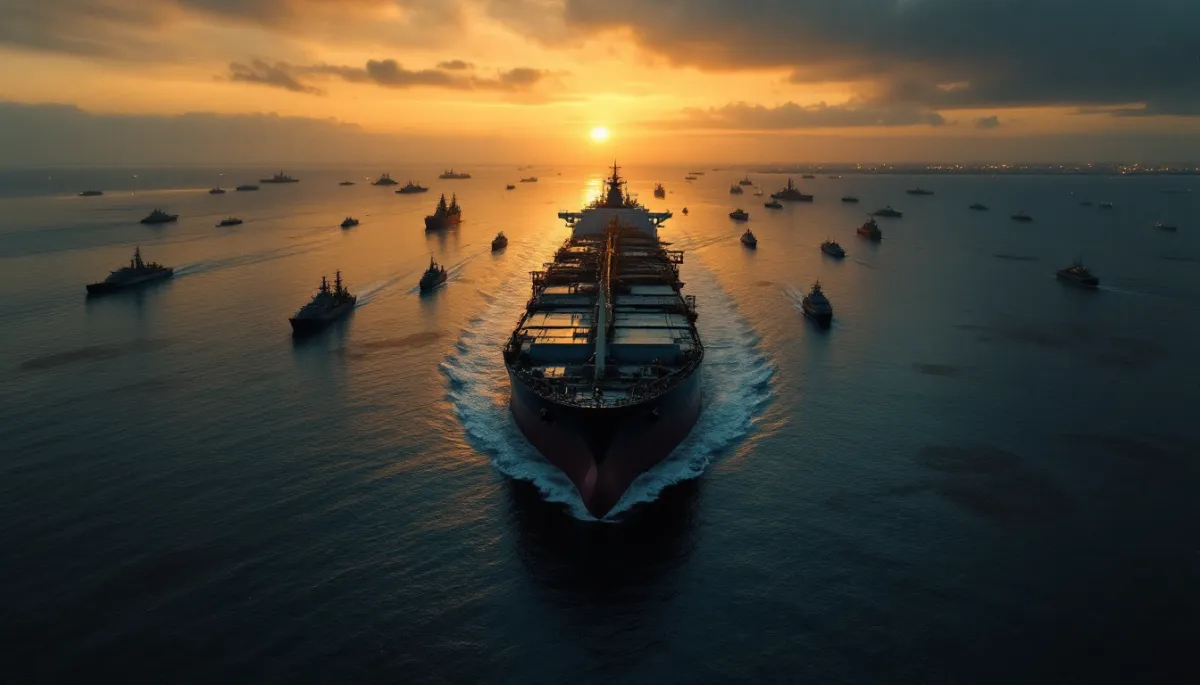
Hormuz Talks Collapse: $110 Oil Risk and What Expats Must Do
The US-Iran diplomatic window that opened on April 8 appears to have closed. Tehran rejected US-mediated negotiations on April 26. Trump cancelled the planned envoy visit the same day. Iran's foreign minister is now in Moscow, not at a negotiating table with Washington. The Strait of Hormuz, effectively shut since late February, is running at 16 vessels per day through what was a 20-million-barrel-per-day corridor. Brent crude is holding above $105 per barrel. A second leg toward $110 to $115 is now the base case if talks do not resume within 72 hours. For expats with Gulf-based assets, pension transfers in progress, or USD-heavy portfolios, this changes the risk calculus.
Last updated: 27 April 2026
Key Takeaways
- Hormuz talks collapsed on April 26 — if no resumption within 72 hours, $110–$115 oil becomes the base case, not a tail risk.
- Iran's foreign minister is in Moscow, not Washington. The diplomatic axis has shifted, and this crisis is not resolving fast.
- Gulf-based pension transfers face processing delays as regional market liquidity deteriorates under sustained oil pressure.
- EUR-hedged UCITS positions gain relative value when oil pressure drives the dollar higher and compresses Asian currencies.
Why Did the Hormuz Talks Collapse on April 26?
Tehran formally rejected US-mediated negotiations on April 26, and Iran's parliamentary speaker confirmed the strait stays closed as long as the US naval blockade continues. Trump cancelled the planned envoy trip the same day. Iran's foreign minister, rather than rescheduling with Washington, flew to Pakistan before transiting to Moscow. That trajectory toward Russia rather than a US-aligned mediator signals that Tehran is seeking alternative leverage, not retreating from the conflict.
The ceasefire technically holds since April 8. The political conditions required to reopen Hormuz are now absent. A ceasefire without reopening achieves nothing for energy markets or for the 16 vessels per day currently moving through a corridor designed for 20 million barrels.
What Iran's Moscow Trip Means for the Timeline
Russia benefits economically from every day Hormuz stays closed. Elevated oil prices increase Russian export revenues. A Russian back-channel encouraging Tehran to hold the line would directly extend the timeline for any resolution. Iran's foreign minister choosing Moscow over Washington immediately after the April 26 collapse is not a neutral decision.
The 72-hour threshold is not symbolic. Beyond it, analysts begin modelling a sustained second phase of elevated oil prices rather than a temporary spike.
What Does $110 Oil Mean for Expat Cost of Living in Southeast Asia?
A sustained move to $110–$115 Brent would translate directly into higher fuel costs, food prices, and electricity bills across Southeast Asia, with Malaysia and Thailand most exposed as markets dependent on subsidised domestic energy supply.
Malaysia's fuel subsidy system is already under strain at $105 oil. A 5% to 10% move higher accelerates the timeline toward a structural review of RON 95 pricing. Expats in KL should plan household budgets on the assumption that domestic fuel prices will move before Q3.
Thailand's position is more fragile. The Bank of Thailand has limited capacity to absorb another inflationary wave without forcing import compression. The baht faces a depreciation scenario under sustained high oil, which directly affects any expat converting local income into GBP, EUR, or USD.
Singapore: Managed Exposure but Not Immune
Singapore manages energy costs through the SGD NEER framework. MAS tightened in April 2026 to contain imported inflation. Higher oil still flows through via electricity tariffs linked to LNG spot pricing. Expats in Singapore on open-market tariff structures will see the passthrough within one to two billing cycles of a sustained $110 Brent environment.
The Grocery Bill Effect
Food prices track fuel costs with a six-to-eight-week lag in Southeast Asia. If Brent reaches $110 and holds through May, expat households in KL, Bangkok, and Jakarta should expect 8% to 12% increases on imported supermarket goods by June. That is the historical transmission range.
How Should Expats with Gulf-Based Pension Transfers Respond?
If you have a pension transfer in progress that requires liquidity from Gulf-linked institutions or regional accounts, check the processing status now rather than waiting for a quarterly update.
GCC equity markets and regional banking liquidity are directly exposed to oil price volatility in both directions. A sharp move up stresses government budget management across the Gulf. A sudden resolution and oil crash, as happened on April 9 when Brent fell 13% in a single session, stresses asset valuations immediately. Transfers sitting in mid-process face execution risk.
If you have a CETV assessment in progress, a QROPS transfer awaiting documentation, or a SIPP consolidation tied to UK scheme administrators, the worsening conditions in Gulf regional markets create bottlenecks. According to HMRC guidance on pension transfers, the statutory transfer value must be calculated and provided within a specified period.
The CETV Window Is Not Permanent
CETV values are calculated against gilt yields. Higher gilt yields typically depress CETV multiples, which means the transfer value available in a DB-to-QROPS or DB-to-SIPP transfer may be lower than it was six months ago. The calculation is typically valid for three months. Waiting does not improve the numbers if the underlying drivers remain in place.
What Should Expats Do With Their Investment Portfolio Now?
Irish-domiciled accumulating UCITS funds in a globally diversified allocation remain the correct structural holding for most European expats in Southeast Asia, regardless of where oil trades next. The temptation to add energy sector tilts or GCC equity exposure is understandable at $105 Brent. Resist it unless the position was already part of your strategic allocation.
What oil volatility does demand is a review of your currency structure. The USD is firm and likely to remain so while US rates stay elevated. EUR-hedged UCITS positions reduce your exposure to a strong dollar depressing the purchasing power of EUR-denominated savings held in an unhedged structure.
Gold at $4,719 per ounce with a modest softening in the past 24 hours reflects the absence of new military escalation, not a signal that the safe-haven case has closed. Your diversification framework should already account for a commodity allocation. If it does not, now is the right time to address that gap with your advisor.
For expats holding significant USD cash: higher-for-longer US rates mean dollar-denominated deposits are working at a meaningful real yield even accounting for energy-driven inflation. The common mistake here is waiting too long to structure cash and portfolio together.
UCITS Over US-Domiciled Funds
Confirm your holdings are in Irish-domiciled UCITS rather than US-domiciled ETFs. US-domiciled ETFs expose non-US persons to 40% estate tax on holdings above $60,000. That structural risk does not shift with the oil price. The IMF's current outlook confirms the energy shock significantly limits the Fed's ability to cut rates in 2026, reinforcing the USD-strength environment.
Is This the Start of a Prolonged Oil Shock?
The Hormuz crisis has already lasted longer than most analysts projected, and the diplomatic collapse on April 26 removes the most plausible near-term resolution path. Whether $110 oil is a month-long event or a six-month environment depends on whether Iran and the US find a new channel through which to negotiate.
The hard truth about market conditions is that you cannot time them. You can structure your portfolio so that a six-month $110 oil environment does not force reactive decisions. The key structural positions are:
- EUR-hedged UCITS funds as the core holding
- Adequate short-term liquidity in your base currency to cover at least 6 months of living costs
- No pending pension transfers in Gulf-linked accounts without a confirmed processing timeline
- A current CETV quote if you are considering a DB transfer in 2026
If you have not yet reviewed your expat financial blueprint, the collapse of Hormuz talks is a forcing function. Currency swings and how to use them is another area worth reviewing given the MYR and baht volatility in play. Bloomberg's energy desk has noted that current dynamics are consistent with a structural repricing rather than a short-term spike.
Frequently Asked Questions
Q: Did US-Iran talks fully collapse on April 26?A: Tehran formally rejected US-mediated negotiations on April 26 and Trump cancelled the planned envoy visit. Iran's foreign minister departed for Pakistan and Moscow rather than rescheduling. The ceasefire technically holds, but the political conditions for reopening Hormuz are absent.
Q: What oil price should expats in Southeast Asia plan around?
A: Brent above $105 is the current level. A move toward $110-$115 is the base case within 72 hours if talks do not resume. Expat households and portfolios should model on $105-$115 Brent through Q2.
Q: How does the Hormuz closure affect a UK DB pension CETV?
A: Elevated energy prices sustain inflation, which keeps gilt yields elevated. Higher gilt yields typically compress CETV multiples. British expats evaluating a transfer should obtain a current CETV quote within its three-month validity window.
Q: Should I add oil or energy-linked funds given the current price?
A: No, unless energy exposure was already part of your strategic allocation. Adding a commodity tilt after a price move means buying into an elevated environment. Review your existing allocation and confirm the structural framework is correct.
Q: Is it safe to proceed with a Gulf-based pension transfer right now?
A: Check the processing status of any active transfer immediately. Gulf regional banking and processing capacity is sensitive to oil volatility. Transfers in mid-process face execution risk in both directions.
Q: Why does Iran's FM being in Moscow matter for energy markets?
A: Russia benefits from elevated oil prices on its exports. A Russian back-channel encouraging Tehran to maintain the Hormuz position would extend the timeline for any reopening. The Moscow visit signals Tehran is building alternative leverage.
Related Reading
- How market volatility creates a retirement advantage for expats with the right structure
- Why the S&P 500's recent volatility matters for expats thinking about retirement
- The hard truth about timing the market and what you can do instead
- Why your current investment strategy may already be obsolete
If the Hormuz situation is putting pressure on your financial plan, get a clear picture of your current structure. Book a no-obligation call with Ciprian to review your position before the 72-hour diplomatic window closes.
This content is for informational purposes only and does not constitute personalised financial, investment, or tax advice. By reading this post, you agree to our disclaimer.