Iran's 12-Day Countdown: The Unpriced Oil Shock Expats Must Watch Before May 15
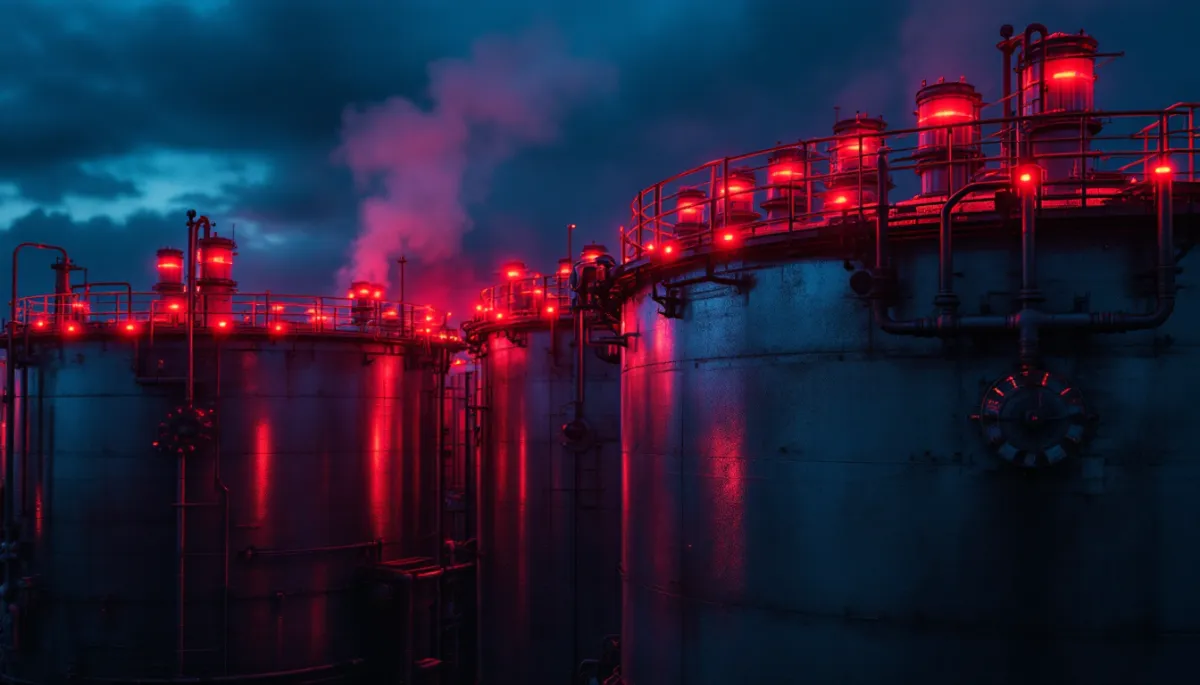
Iran's crude storage tanks have 12 to 22 days before they are full. After that, the country faces a binary it cannot defer: cut production or negotiate. A forced production halt of 3 million barrels per day-plus is not priced into Brent, which is already at $118. It is not priced into your airline tickets, your food costs, or the SGD/MYR rate your salary converts through. The window between now and approximately May 12 to 15 is the single most consequential decision point in global energy markets, and most expat investors are not watching it.
Last updated: 30 April 2026
Key Takeaways
- Kpler analysis indicates Iran will exhaust crude storage capacity within 12 to 22 days from April 29, creating a hard deadline around May 12 to 15 when Tehran must either cut production or negotiate under US terms.
- A forced Iranian production halt would remove 3 million bpd-plus from a market already in crisis, potentially adding $15 to $25/bbl to Brent.
- Markets have not priced this second-order shock. Goldman Sachs' Q4 2026 forecast of $90/bbl already looks obsolete at $118 current prices.
- Expats with pending financial decisions involving pension transfers, property purchases, or currency conversions face a closing window before the outcome becomes clear.
What Is the Storage Clock and Why Does It Matter?
Crude storage is not infinite. When a country with nowhere to send its oil runs out of places to put it, production must stop, regardless of politics, negotiations, or military posture.
Kpler, the data firm that tracks physical oil flows via satellite and tanker telemetry, has modelled Iran's current storage utilisation against the blockade-reduced export rate. The conclusion: Iran exhausts available crude storage capacity within 12 to 22 days from April 29. That places the critical date between approximately May 11 and May 21, with the central estimate around May 12 to 15.
What Happens When Storage Fills
Once storage is full, Iran cannot continue producing crude at current rates without immediate outlets. The options are binary:
- Cut production and remove 3 million bpd-plus from the global market, creating a second supply shock that Brent has not priced in.
- Negotiate and accept a ceasefire under US/Israeli conditions that lift the blockade.
There is no third path. Dumping crude into the sea is not viable. Selling at steep discounts to China requires shipping, and the blockade makes that increasingly difficult.
Why Is This Risk Not Priced Into Markets?
Markets are pricing the current supply disruption. They are not pricing the scenario where a forced Iranian shutdown doubles the disruption.
Brent at $118 reflects Iranian crude already off the market due to the blockade. It does not reflect a scenario where Iran voluntarily or involuntarily removes another 3 million bpd on top of existing losses.
For context:
- The 1973 Arab Oil Embargo removed approximately 4.4 million bpd from the market and produced a fourfold price increase within three months.
- Iran's 3 million bpd-plus represents roughly 3% of global supply.
- Combined with existing Iranian export disruption already under the blockade, a full production halt would represent the largest simultaneous supply withdrawal in oil market history.
The reason this is unpriced is not analyst ignorance of the storage clock. It is that markets are still assigning non-trivial probability to a ceasefire. Satellite shipping data, Trump's public statements, and IRGC behaviour through April suggest the ceasefire probability is lower than options markets currently imply.
Read more: Iran Seizes Ships Under the Ceasefire: Why Hormuz Is Now a Permanent Risk Factor
What Does a $15 to $25/bbl Second Shock Mean for Expats?
Brent at $133 to $143 would be the highest sustained crude price in history. The cost-of-living consequences for expats across Southeast Asia are structural, not temporary.
The first-order effects are visible at the petrol station and the supermarket. The second and third-order effects take 4 to 8 weeks to flow through, but they are already in motion.
Malaysia
The June subsidy decision becomes dramatically more fraught if Brent is at $135. PETRONAS confirmed mitigation through May. A June extension at $135-plus oil costs Malaysia's national oil company materially more per day. The choice is between fiscal strain and passing costs to residents.
Singapore
Singapore imports 100% of its energy. Electricity tariff reviews occur quarterly. A second oil shock lands into Q2 review cycles with no domestic production buffer. EMA quarterly adjustments would reflect a $133 to $143/bbl environment by July.
UK and EUR Pension Values
The BoE and ECB are already in a stagflationary bind at $118. At $135 to $143, the political pressure to hold rates despite slowing growth becomes overwhelming. Gilt yields continue repricing. Every basis point rise in gilt yields lowers the present value of defined benefit pension liabilities and with it, Cash Equivalent Transfer Values. For British expats with CETV decisions, each week of delay in a rising gilt yield environment is a measurable cost. Read more: UK Stagflation Is Here: What GBP Expats Must Do With Their Pension
What Is the Ceasefire Probability?
Based on observable evidence, including Iranian seizures of ships during the nominal ceasefire, IRGC battlefield posture, and Trump's April 29 blockade confirmation, the probability of a May 12 to 15 ceasefire is lower than consensus assumes.
Key signals to watch between now and May 12:
- Shipping data from Kpler and Vortex — if tanker movements in and out of Iranian terminals increase, it signals informal supply routes. If they hold at zero, the storage clock is ticking as modelled.
- Trump public statements — the April 29 indefinite blockade language is the hardest he has been. Any softening in language would shift probabilities.
- Saudi Aramco guidance — Saudi Arabia's production posture in the next 48 to 72 hours signals whether OPEC+ can partially absorb an Iranian production halt.
The Chinese Variable
Bloomberg and NBC have reported China dispatched approximately 14 tankers toward Hormuz in defiance of the blockade. If any breach the US naval perimeter, the diplomatic calculus changes entirely. A US-China maritime confrontation over oil supply routes would be a third-order escalation with no current market pricing.
Read more: China Defies the Hormuz Blockade: Why Expat Portfolios in Asia Face a Second-Front Risk
What Should Expats Do Before May 12?
The action is not to panic-sell or pile into energy stocks. It is to identify which pending decisions involving pensions, currency conversions, and property purchases are time-sensitive and accelerate them before the outcome becomes clear.
Pension Transfers and CETV Decisions
If you have a UK DB pension and are evaluating a transfer, request an updated CETV illustration immediately. CETV values move with gilt yields. The direction of travel is adverse for transfer values as yields rise. Waiting until May 15 to see what happens means your CETV may be lower by then regardless of what happens to oil.
Currency Conversions
GBP/MYR at approximately 5.22 reflects the current macro environment. A second oil shock that hits sterling harder than MYR would shift that rate adversely for British expats remitting from GBP. Malaysia is a net oil producer; the UK is a net importer. If you have a conversion planned, front-loading before May 12 reduces directional exposure.
Property and Large Purchases in Southeast Asia
Ringgit strengthening has been driven by Malaysia's AI supply chain positioning, a story that is domestically driven and relatively insulated from a second oil shock. Purchasing power in MYR is better now than it may be post-shock. Read more: How Busy Expats Can Turn Currency Swings Into Savings
Frequently Asked Questions
Q: When exactly does Iran run out of crude storage?
A: Kpler's analysis as of April 29, 2026 indicates between 12 and 22 days from that date, placing the critical window between approximately May 11 and May 21, with a central estimate around May 12 to 15. This is the point at which Tehran must either cut production or negotiate under US conditions.
Q: Is a ceasefire more likely than a production halt?
A: Observable evidence including ship seizures during the nominal ceasefire period, Trump's April 29 indefinite blockade language, and IRGC posture suggests ceasefire probability is lower than consensus assumes. Both outcomes remain possible. The binary nature of the decision is why positioning before the outcome matters.
Q: How would a second oil shock affect the ringgit?
A: Malaysia is a net oil exporter. A second supply shock that drives Brent to $133 to $143 is theoretically positive for MYR terms of trade in the medium term. However, global risk-off flows could temporarily strengthen USD broadly, compressing MYR/USD. The net effect is uncertain.
Q: Does the storage clock reset if Iran starts using tankers as floating storage?
A: Floating storage may extend the clock by days, not weeks, and does not change the fundamental binary. It is expensive, limited by available VLCCs, and constrained by insurance and flag risk under the blockade.
Q: What happens to expat pension values if Brent hits $140?
A: UK gilt yields would rise under a second oil shock as the BoE faces acute stagflationary pressure. Rising gilt yields reduce the present value of DB pension liabilities and therefore lower CETV values. European pension schemes face a parallel ECB dilemma.
Q: Should I sell assets before May 12?
A: No blanket answer fits every situation. The correct question is: which pending decisions involving pension transfers, currency conversions, or large purchases are time-sensitive? Those should be accelerated. Existing long-term portfolio positions with a 5 to 10 year horizon do not require action based on a binary event that resolves within weeks.
Related Reading
- Iran Seizes Ships Under the Ceasefire: Why Hormuz Is Now a Permanent Risk Factor
- UK Stagflation Is Here: What GBP Expats Must Do With Their Pension
- China Defies the Hormuz Blockade: Why Expat Portfolios in Asia Face a Second-Front Risk
- Diversification: The Key to Building a Resilient Portfolio
The storage clock is ticking. What happens on May 12 to 15 will either confirm that markets were right to hold near $118, or produce a second supply shock that reprices everything. The window to act on time-sensitive decisions is closing.
Book a no-obligation call with Ciprian
This content is for informational purposes only and does not constitute personalised financial, investment, or tax advice. By reading this post, you agree to our disclaimer.