Malaysia's Hormuz Diplomacy: Why KL Expats May Be Better Protected Than They Think
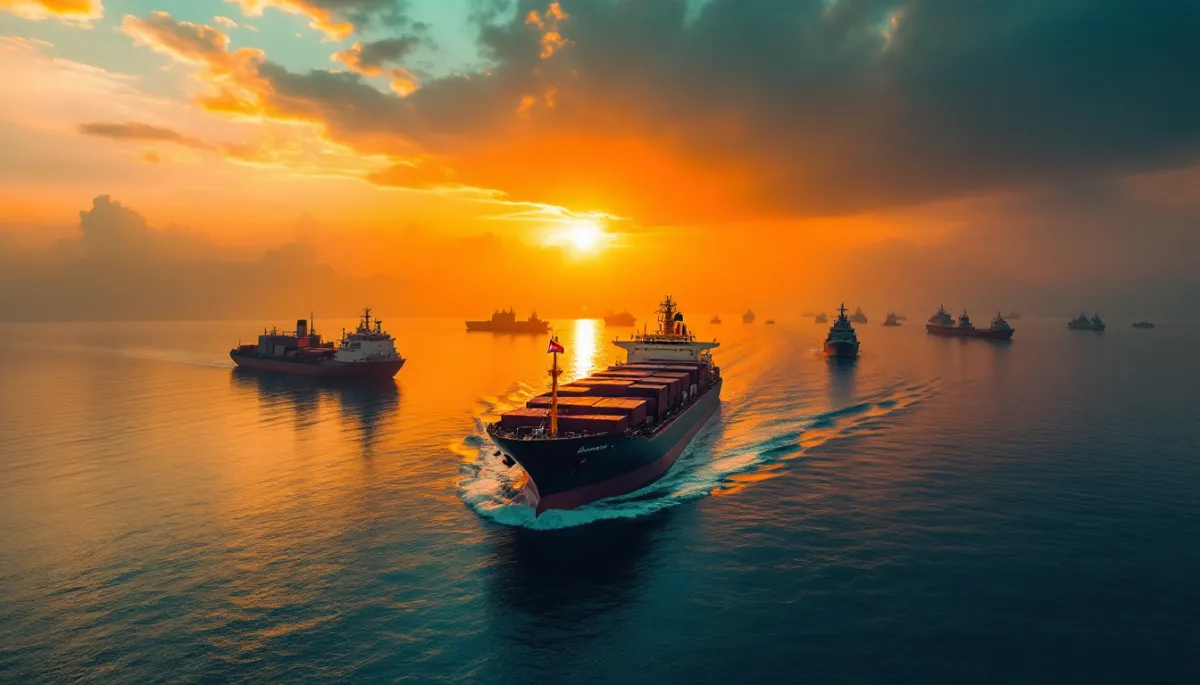
Malaysia just did something no other Southeast Asian country managed. It negotiated special transit privileges through the Strait of Hormuz directly with Iran's President Pezeshkian. While Indonesia scrambles with jet fuel shortages and Thailand absorbs the full cost of being a net oil importer, Malaysia is getting its ships home. The first of seven Malaysian-owned vessels stranded at Dubai port is due back in KL on Friday 18 April.
Key Takeaways
- Malaysia secured special Hormuz transit privileges through direct talks with Iran, a diplomatic advantage no other Southeast Asian nation has achieved during this crisis.
- The first of seven stranded Malaysian ships is returning from Dubai, expected in KL on Friday 18 April.
- The World Bank raised Malaysia's 2026 GDP growth forecast to 4.4% despite Middle East uncertainty.
- The Ringgit firmed to 3.9465 per USD on ceasefire optimism and Malaysia's structural position as a net oil exporter.
What Did Malaysia Actually Negotiate With Iran?
Malaysia secured a bilateral agreement granting its vessels special transit rights through the Hormuz Strait, bypassing the US naval blockade restrictions that apply to most commercial traffic. The deal was reached through direct talks between Malaysian officials and Iranian President Masoud Pezeshkian. The specific terms have not been publicly disclosed, but the practical effect is clear: Malaysian-flagged vessels can move through waters that remain closed to most international shipping.
Seven Malaysian-owned ships were stranded at Dubai port when the US blockade activated on 15 April. The first is now returning. For a country that depends on seaborne trade for a significant share of its economy, this is a material de-risking of supply chain exposure.
No other ASEAN nation has secured comparable access. Indonesia, Thailand, and Singapore are working through the same constrained shipping lanes as everyone else. Malaysia's diplomatic channel with Tehran gives it a structural advantage that is already showing up in currency markets and fuel pricing.
How Is This Different From Normal Shipping Access?
Before the Hormuz crisis, all commercial vessels transited the Strait freely. Since the US naval blockade began, approximately 10 million barrels per day have been removed from global supply. The US military has turned back 13 ships since 15 April. Malaysian vessels, under this bilateral deal, are exempt from that enforcement, at least for now.
The risk is that this exemption could be revoked if the broader diplomatic situation changes. If the US objects to Malaysia's side deal with Iran, or if Iran withdraws the privilege as a bargaining chip, the advantage disappears. But as of 17 April, it holds.
Why Does This Matter for Expats Living in Malaysia?
Malaysia's combination of net oil exporter status, diplomatic access to Hormuz, and strong GDP growth makes it one of the most structurally insulated bases for expats during this crisis. If you are a European professional living in KL, Penang, or Johor, the Hormuz crisis is affecting your life less than it is affecting your counterparts in Bangkok, Jakarta, or even Singapore.
Fuel Prices Are Falling, Not Rising
Malaysia's fuel prices for 16-22 April reflect the government's management of the crisis: unsubsidised petrol fell 25 sen, and diesel on Peninsular Malaysia dropped 75 sen. While these prices are still elevated versus 2025 levels, the direction is the opposite of what expats in Thailand and Indonesia are experiencing. Malaysia's subsidy system and net exporter revenue provide a buffer that oil-importing neighbours simply do not have.
The Ringgit Is Strengthening
USD/MYR hit 3.9465 on 16 April, continuing a 12-month appreciation trend that has made the Ringgit Asia's top-performing currency. For expats earning in USD, GBP, or EUR and spending in MYR, this means local purchasing power has been relatively stable even as the region absorbs an energy shock. GBP/MYR sits at approximately 5.33, and EUR/MYR at approximately 4.65.
The World Bank raised Malaysia's 2026 GDP growth forecast to 4.4% despite Middle East uncertainty. Foreign investors continue to pour capital into Malaysian bonds, and the country's tech and data-centre investment wave is attracting structural inflows. These are not speculative moves. They reflect a market that sees Malaysia's fundamentals holding through the crisis.
Employment Risk Is Lower
For expats working in Malaysia's oil and gas sector, the Hormuz crisis creates different dynamics than in the Gulf. Malaysian energy companies like Petronas benefit from higher oil prices on the revenue side, even as they manage supply chain complications. Contrast this with Gulf-based expats whose employers face direct operational disruption from the blockade and elevated security risk. KL-based energy professionals are in a comparatively stronger position.
How Does Malaysia Compare to Regional Peers Right Now?
Malaysia sits at the top of the regional resilience table, with Thailand and Indonesia most exposed and Singapore structurally insulated but cost-pressured. Here is how the crisis maps across the four main expat hubs.
Thailand
Net oil importer. No special Hormuz access. Jet fuel shortages acute. AirAsia suspended Bangkok-Shanghai on 17 April. Tourism sector under pressure. The Baht is weakening against the dollar. Cost-of-living inflation for expats in Bangkok is accelerating.
Indonesia
Net oil importer with acute dependence on Hormuz-adjacent supply chains. Jet fuel physically constrained, not just expensive. Multiple airline routes cancelled. FDI rebounded in Q4 2025 but energy security remains the primary vulnerability.
Singapore
Structurally resilient via Malaysian and Indonesian pipeline gas (approximately 50% of supply bypasses Hormuz). SGD holding firm. MAS tightened policy on 14 April in response to the energy shock. Singapore expats face elevated costs but not supply disruption. The trade-off is that Singapore was already the most expensive base in the region, and the energy crisis widens the cost gap further.
Malaysia
Net oil exporter. Special Hormuz transit deal. Fuel prices falling week-on-week. Ringgit strengthening. GDP forecast raised. The combination makes Malaysia the most cost-effective and structurally insulated major expat hub in ASEAN during this specific crisis.
Should Expats Factor This Into Relocation or Repatriation Decisions?
If you are already in Malaysia, the structural case for staying has strengthened. If you are weighing Malaysia against other regional options, the crisis has tilted the comparison. This does not mean Malaysia is risk-free. Petronas faces its own supply cliff in May, and the special Hormuz transit deal could be revoked. But on a relative basis, Malaysia's position is unusually strong.
For expats considering repatriation to Europe, the calculus is different. The EU's Russian LNG ban takes effect 25 April, creating its own energy cost pressure on the European side. Returning to a European base does not necessarily mean escaping energy-driven cost inflation. It may mean trading one set of energy risks for another.
The practical action is to review your financial plan's geographic assumptions. If your plan was built around a three-year stay in KL, the structural advantages of the Malaysian base may justify extending that horizon. If your plan assumed you would rotate to Singapore or Bangkok, the cost-of-living differential has widened.
What Risks Should KL Expats Still Watch?
Malaysia's advantages are real but conditional. Three risks could erode the current position. First, the special Hormuz transit deal is bilateral and unguaranteed. If US pressure forces Malaysia to align with broader sanctions enforcement, the exemption ends. Second, Petronas has flagged supply constraints that could materialise in May. If domestic production cannot compensate for disrupted imports, the fuel subsidy system comes under strain. Third, if the US-Iran ceasefire collapses on 21 April and oil spikes above $100 again, risk-off capital flows could offset Malaysia's net-exporter tailwind on the currency.
None of these risks are immediate. All of them are worth monitoring. The correct posture for expats in Malaysia is structured vigilance: maintain your emergency fund, keep your portfolio diversified across jurisdictions, and do not assume today's advantages are permanent.
Frequently Asked Questions
Q: Is Malaysia's Hormuz transit deal publicly confirmed?
A: Malaysian vessels have been granted special transit privileges following direct talks with Iranian President Pezeshkian. The specific terms have not been officially published, but the operational effect is confirmed by the first stranded vessel's scheduled return to KL on Friday 18 April.
Q: How long will Malaysia's fuel price advantage last?
A: As long as Malaysia maintains its net oil exporter status and the Hormuz transit deal holds. Petronas has flagged potential supply constraints in May that could narrow the advantage. The fuel subsidy system also depends on government fiscal capacity, which is under strain from elevated global prices.
Q: Is the Ringgit likely to keep strengthening?
A: The Ringgit's 12-month appreciation has been driven by structural factors: foreign bond inflows, tech investment, and net oil exporter revenue. If a Hormuz deal collapses and oil spikes, risk-off flows could offset these tailwinds. At 3.9465 per USD, the Ringgit is at its strongest level since mid-2018.
Q: Should I convert GBP or EUR to MYR now?
A: GBP/MYR at 5.33 and EUR/MYR at 4.65 are within recent ranges. The decision depends on your time horizon and upcoming MYR-denominated expenses. If you have school fees, rent, or property payments due in Q2, locking in current rates reduces exposure to a potential MYR spike if a Hormuz deal is reached.
Q: How does Malaysia's position affect property decisions for expats?
A: Malaysia's structural resilience supports the case for medium-term property commitments in KL. Rental yields in Desa ParkCity and Mont Kiara remain attractive relative to Singapore and Bangkok. The risk is that a prolonged Hormuz crisis eventually strains Malaysia's fiscal position through subsidy costs.
Q: Are Gulf-based expats better off relocating to KL?
A: For expats currently in the UAE, Kuwait, or Saudi Arabia facing elevated security risk, Malaysia offers a lower-risk base with existing infrastructure for European expats: international schools, healthcare, and familiar banking access. The financial planning implications of relocating mid-crisis require a structured review of tax residency, pension continuity, and employment terms.
Related Reading
- Malaysia vs Singapore on Hormuz: what expats in both cities must know
- The Petronas supply cliff KL expats must watch
- How currency swings create savings opportunities for expats
- Your life has 5 time zones, your money should not
Malaysia's structural advantages during this crisis are real, measurable, and relevant to your financial plan. If your cost-of-living assumptions, currency exposure, or relocation timeline were set before the Hormuz blockade, they need updating.
Book a no-obligation call with Ciprian
This content is for informational purposes only and does not constitute personalised financial, investment, or tax advice. By reading this post, you agree to our disclaimer.