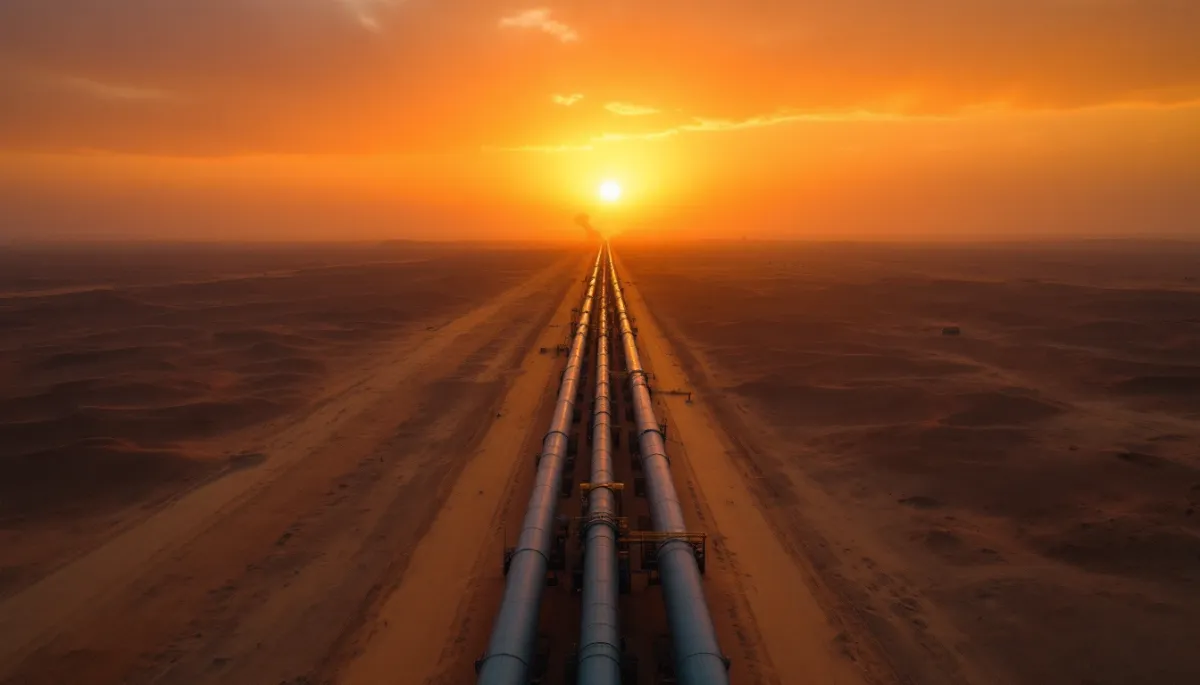
Saudi Arabia's Backup Oil Route Just Got Hit: Why Expat Costs May Not Drop Even if Hormuz Reopens
Everyone is watching the Strait of Hormuz. The ceasefire clock ticks toward April 22. Markets are pricing in a reopening. There is a problem with this narrative: on April 9, Iranian forces struck Saudi Arabia's East-West crude pipeline, the primary alternate export route that bypasses Hormuz entirely. If both the strait and the backup are compromised, the global oil supply picture is worse than the current $97 Brent price suggests. For expats across Southeast Asia paying energy bills, filling cars, and watching grocery prices climb, this is not an abstract geopolitical story. It is a cost-of-living event with no quick resolution.
Key Takeaways
- Iran struck Saudi Arabia's East-West crude pipeline on April 9, compromising the primary alternate oil export route that bypasses the Strait of Hormuz.
- Even if the Hormuz ceasefire holds and the strait reopens by April 22, pipeline damage takes weeks to months to fully repair.
- Expats in net oil-importing countries (Thailand, Philippines, Singapore) face sustained energy cost pressure regardless of the ceasefire outcome.
- The combination of Hormuz restrictions and pipeline damage means global oil supply constraints persist into Q2 2026 at minimum.
What Is the East-West Pipeline and Why Does It Matter?
The East-West pipeline (also known as the Petroline) is Saudi Arabia's most important oil infrastructure outside of Hormuz, capable of moving approximately 5 million barrels per day from the Eastern Province to the Red Sea port of Yanbu. It was built specifically as an insurance policy against Hormuz disruption. When the strait is blocked or contested, this pipeline is the Plan B for getting Saudi crude to global markets without passing through Iranian-controlled waters.
Iran's strike on April 9 hit this infrastructure directly. The damage assessment is still incomplete from open sources, but the strategic intent is clear: remove the alternative. If Hormuz remains functionally closed (only 19 vessels have transited since the ceasefire, versus a pre-war daily average of 100+) and the East-West pipeline is compromised, Saudi Arabia's two primary export pathways are both degraded simultaneously.
For context, Saudi Arabia exports roughly 6-7 million barrels per day. The pipeline handles a significant share of that capacity. Any reduction in throughput tightens global supply at a time when inventories are already under pressure.
The Strategic Calculus
Iran's attack on the pipeline was not random. It signals that the ceasefire, even if it holds politically, will not return oil markets to normal quickly. Damaging the alternative route raises the cost of any future Hormuz closure and gives Iran more leverage in the Islamabad negotiations. VP Vance's warning that the US negotiating team is "not that receptive" to being played suggests Washington understands this. The question is whether the market does.
How Does This Affect Oil Prices Beyond the Ceasefire?
Brent crude at $97/bbl already reflects partial recovery from the 13% crash on April 8, but it does not yet price in sustained pipeline disruption. The market rallied on ceasefire optimism. The pipeline strike was reported within the same news cycle and partially offset the relief, but the full implications take time to register.
Pre-war Brent was approximately $73/bbl. Even if Hormuz fully reopens on April 22, the pipeline damage means Saudi export capacity remains constrained. Repair timelines for large-diameter crude pipelines depend on the severity of the strike. Minor damage to pumping stations can be fixed in days. Structural damage to the pipeline itself takes weeks to months. The EIA's analysis of global chokepoints shows how concentrated the world's oil supply routes are.
Goldman Sachs' escalation scenario of Brent exceeding its 2008 all-time high of $147/bbl remains on record. That scenario assumed Hormuz closure alone. Both Hormuz and the East-West pipeline being degraded simultaneously was not the base case even in Goldman's most aggressive modelling.
What Traders Are Missing
The ceasefire narrative has compressed oil volatility. VIX dropped 17.5% to 19.49. Brent fell 13% in a single session. This is the market pricing in resolution. If resolution does not materialise by April 22, the repricing from this lower base will be sharp. The pipeline strike is the variable that makes a smooth resolution less likely even if the political talks succeed.
What Does This Mean for Expat Living Costs in Southeast Asia?
For expats in net oil-importing countries like Thailand, the Philippines, and Singapore, the pipeline strike extends the period of elevated energy costs regardless of what happens at Hormuz. Even in Malaysia, a net oil exporter, the domestic fuel subsidy structure is under pressure from the gap between global crude prices and regulated pump prices.
Thailand imports virtually all of its crude oil. Brent at $97 versus the pre-war $73 represents a 33% increase in import costs that flows through to petrol prices, electricity tariffs, and transport-linked goods. For an expat family in Bangkok spending THB 150,000/month, energy and transport-linked inflation of 5-8% adds THB 7,500-12,000 per month to baseline costs.
Singapore's electricity market is particularly exposed. The city-state relies on imported LNG, and the EU's ban on short-term Russian LNG contracts taking effect April 25 adds another supply constraint. Singapore-based expats are looking at rising electricity bills from multiple directions simultaneously.
Malaysia: Net Exporter with Domestic Pressure
Malaysia benefits fiscally from higher oil prices through Petronas dividends and petroleum-related government revenue. MYR is holding firm at 3.98 per USD. But the domestic subsidy bill grows as the gap between global and regulated prices widens. Bank Negara is holding rates, but if subsidies are adjusted, Malaysian consumer prices follow. For expats in KL earning in USD or GBP, the currency position is strong. For those earning in MYR, the subsidy question becomes directly relevant to disposable income.
Should Expats Adjust Their Portfolio for Sustained Energy Disruption?
The pipeline strike makes energy price elevation more persistent than a simple ceasefire-and-reopen scenario, which means portfolio positioning should account for months of elevated costs, not weeks. This is not a call to buy oil futures. It is a reminder that cost-of-living assumptions feed directly into financial planning variables: savings rate, investment capacity, and time horizon.
If your monthly expenses are rising 5-8% due to energy-linked inflation and you have not adjusted your savings allocation, you are investing less in real terms without realising it. The difference compounds. Over five years, an unrecognised 5% reduction in monthly investment contributions can reduce terminal portfolio value by 15-20% due to lost compounding.
For expats with diversified portfolios that include energy exposure via broad market index funds or commodity allocations, the pipeline strike is already partially offset in your returns. The S&P 500 energy sector benefits from higher oil prices. The question is whether your overall allocation reflects the world you actually live in, or the one you planned for before the crisis.
The Insurance Value of Structure
A well-structured portfolio with geographic diversification, currency hedging awareness, and appropriate asset class mix absorbs shocks like this without requiring reactive changes. The expat who panics and shifts to cash is locking in higher living costs with lower investment returns. The expat who maintains structure and rebalances on schedule captures the eventual normalisation.
How Long Could Gulf Oil Infrastructure Be Disrupted?
Pipeline repair timelines vary from days to months depending on damage severity, and the geopolitical situation makes rapid repair less certain. The East-West pipeline has been attacked before. In 2019, drone strikes hit Saudi Aramco facilities at Abqaiq and Khurais, temporarily halving Saudi output. Repairs took weeks. The current strike may be less severe or more severe, and the information is not yet public.
The broader question is whether Iran's willingness to strike Saudi infrastructure during a ceasefire indicates that further attacks are possible. Kuwait's National Guard facilities were also hit within the same 40-hour window. If the pattern continues, Gulf oil infrastructure operates under persistent threat regardless of the diplomatic track.
For Gulf-based expats, particularly those in oil and gas roles in Saudi Arabia, Kuwait, and the UAE, this is both a professional and personal security consideration. Employer risk profiles are changing. The employment risk for Gulf expats extends beyond contract terms to physical security of the infrastructure their employers operate.
The 22 April Deadline
The ceasefire window closes approximately April 22. If the Islamabad negotiations produce a concrete Hormuz reopening framework and the pipeline is repaired, Brent could retrace toward $80-85. If negotiations collapse and infrastructure attacks continue, Goldman's $147 scenario becomes increasingly relevant. The range of outcomes over the next 11 days is unusually wide. Portfolio strategy should account for both, not bet on either.
Frequently Asked Questions
Q: What is the East-West pipeline?
A: Saudi Arabia's primary oil export route that bypasses the Strait of Hormuz. It carries crude from the Eastern Province to the Red Sea port of Yanbu, with a capacity of approximately 5 million barrels per day. Iran struck this pipeline on April 9, 2026.
Q: How does the pipeline attack affect oil prices?
A: It removes the backup route that markets were counting on if Hormuz remained closed. Brent at $97/bbl reflects ceasefire optimism but not sustained pipeline disruption. If both routes remain degraded, prices could rise further. Pre-war Brent was $73.
Q: Will petrol prices in Southeast Asia go up because of this?
A: For net oil importers (Thailand, Philippines, Singapore), yes. Energy costs remain elevated as long as global supply is constrained. Malaysia's domestic fuel prices are subsidised but the subsidy gap is widening, creating fiscal pressure.
Q: How should expats protect their savings from energy inflation?
A: Maintain your investment structure. Do not shift to cash. Ensure your portfolio includes geographic and asset class diversification. Review your monthly savings rate to confirm it accounts for higher living costs. A 5% unrecognised reduction in monthly contributions compounds to significant losses over a decade.
Q: Is gold still relevant as a hedge?
A: Gold at $4,747 is down from the April 7 peak but up 24% year-to-date. The pipeline strike supports the case for continued geopolitical risk premium. Gold serves a structural role in a diversified portfolio, particularly when multiple supply disruptions coincide.
Q: When will oil prices normalise?
A: The earliest catalyst is the April 22 ceasefire deadline. If Hormuz reopens and the pipeline is repaired, Brent could retrace toward $80-85. If both remain disrupted, $100+ oil persists through Q2 at minimum. The EIA forecasts Brent below $80 in Q3 2026 assuming resolution.
Related Reading
- Oil crashed 13% in one day: what it means for expats in Asia
- Think you're diversified? Think again. A guide for high-income expats
- Iran's Hormuz toll booth: what Gulf-based expats need to know
- Petrol prices in Southeast Asia: how Middle East conflict hits expats
The cost of living is shifting under your feet. If your financial plan was built before this crisis, the assumptions may no longer hold. A 30-minute review of your structure, savings rate, and currency exposure is the minimum response.
Book a no-obligation call with Ciprian
This content is for informational purposes only and does not constitute personalised financial, investment, or tax advice. By reading this post, you agree to our disclaimer.