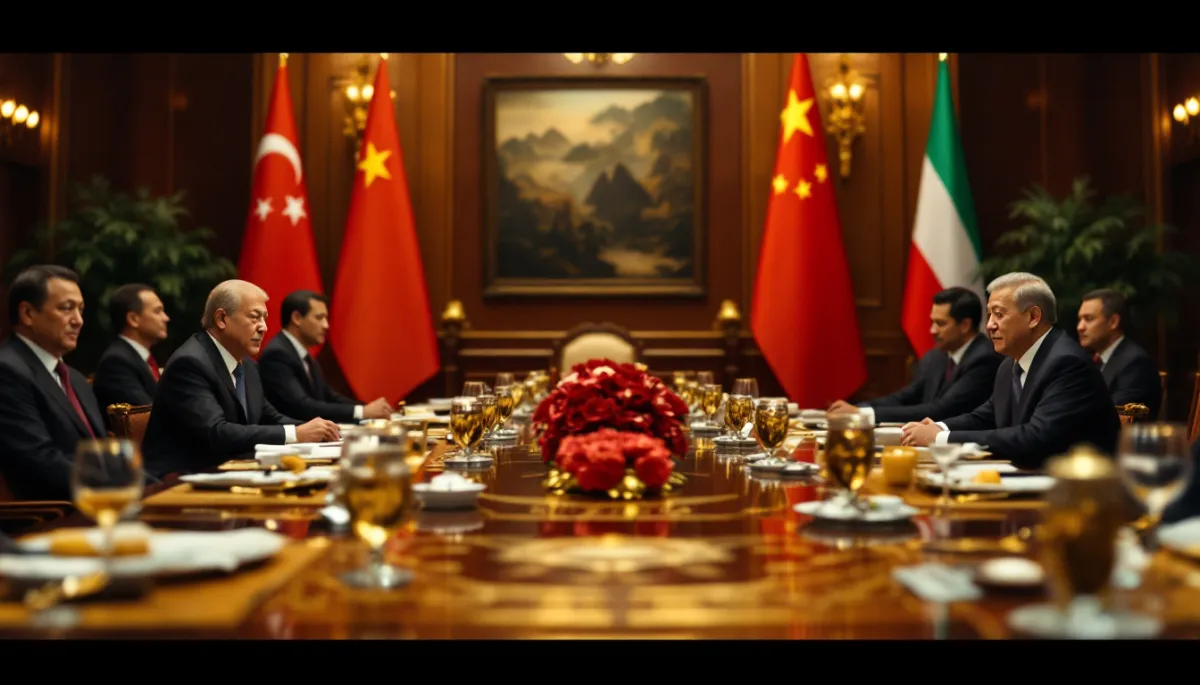
Trump-Xi Summit Day 2: What Expat Portfolios in Asia Must Do Now
The Trump-Xi Beijing summit enters its second and final day today, and what comes out of it will either trigger the largest risk-asset repricing of 2026 or confirm that tariffs stay punishing through Q3. Day 1 gave markets a positive tone. Xi confirmed China would open its markets further, framed the relationship as "constructive, strategic, and stable," and issued the most explicit Taiwan conflict warning in four years. No binding trade agreement was signed. That part arrives, or does not, today. If you hold MYR, work for a tech employer in Southeast Asia, or carry pension assets exposed to Asian equities, today's outcome reaches your financial picture directly.
Last updated: 15 May 2026
Key Takeaways
- Day 1 produced positive framing and China's market-opening commitment but no binding trade deal; Day 2 is where binding commitments emerge and markets reprice immediately.
- A tariff rollback or rare-earth truce formalisation would strengthen MYR and SGD and reduce pressure on Asia-based tech and manufacturing employers.
- Xi's explicit Taiwan conflict warning on Day 1 keeps the Taiwan Strait risk premium elevated regardless of today's trade outcome.
- GBP pension clients with indirect USD/GBP exposure should hold FX conversion decisions until Day 2 outcomes are confirmed today.
What Did Trump-Xi Day 1 Actually Deliver for Expat Portfolios?
Day 1 confirmed China's intent to open its markets, established "constructive, strategic, and stable" as the official relationship framing, and produced no binding commitments — positioning Day 2 as the session markets are actually watching.
Preparatory talks held in South Korea on Wednesday described as "balanced and positive" set a cooperative tone before the Beijing meetings even began. Xi told accompanying US business leaders that China would open its markets further, a signal markets read as Beijing wanting a deal more than a standoff. The relationship framing matters: the deliberate step back from the confrontational posture of the past 18 months signals a floor under the relationship, which reduces the probability of the worst-case scenario for Asian portfolios.
For your investments, Day 1 is a green light to stay positioned, not to over-rotate. The real print comes today.
What Xi's Taiwan Warning Actually Means for Your Portfolio
Xi's statement that the two countries "will have clashes and even conflicts" if Taiwan is mishandled is the clearest public warning since August 2022. Taiwan was absent from the post-Day-1 joint statement and Trump ignored direct questions from reporters on the subject.
This is deliberate ambiguity on Washington's part, not an oversight. For expat investors, the implication is specific: the Taiwan Strait risk premium is elevated and will not compress regardless of Day 2 trade outcomes. If your portfolio carries heavy semiconductor or Taiwan-listed equity exposure, that risk premium sits alongside the trade binary as a separate, persistent variable. Treat them as independent inputs to your allocation decision.
What Are the Day 2 Scenarios Expats Must Plan For?
Three outcomes are live today: a tariff rollback, a rare-earth truce extension or formalisation, and a stalemate — each producing a distinct currency and employer-risk outcome for expats in Malaysia, Singapore, and the Gulf.
The Tariff Rollback Scenario
A formal tariff reduction or extension of the October 2025 APEC pause framework would be the single largest market mover of the week. MYR and SGD are structurally positioned to benefit. Malaysia's raised 2026 GDP growth forecast of 4-5% and its role as a key ASEAN transshipment hub make it a direct beneficiary of reduced US-China trade friction. A rollback would strengthen ringgit purchasing power for expats remitting income to KL and reduce cost pressures at regional supply-chain employers.
The Rare-Earth Truce Scenario
China controls approximately 60-70% of global rare-earth supply and processing. The October 2025 truce kept critical minerals flowing to Western manufacturers. A formalisation or 12-month extension today materially reduces the risk premium embedded in tech-sector employer valuations. If your income comes from a semiconductor, defence technology, or advanced manufacturing employer in Asia, this is a direct input to your employment risk calculus. A truce lapse reopens the supply-chain disruption trade immediately.
The Stalemate Scenario
A stalemate is not catastrophic. It leaves the current tariff architecture in place, keeps USD strength as the base case through Q3, and delays any MYR or SGD appreciation. It does not trigger a risk-off move unless accompanied by explicit public confrontation on Taiwan. For most expat portfolios, a stalemate means staying the course with no tactical action required.
How Does the Summit Outcome Affect Expat Currency Positions?
A positive Day 2 outcome would likely strengthen both MYR and SGD against USD; a stalemate extends dollar strength and delays any currency window for GBP and EUR expats remitting to KL.
MYR sits at approximately 3.9220 versus USD as of this morning. Its dual exposure, as an oil-linked currency and an ASEAN trade currency, means it responds to both the Hormuz situation and the US-China trade binary simultaneously. A tariff rollback combined with sustained oil revenues would push MYR toward 3.80-3.85 territory. A stalemate leaves MYR rangebound with a mild downside bias from continued dollar strength.
SGD tells a different story. Singapore's economy contracted 0.3% in Q1 2026 and the government has flagged a possible GDP outlook review if energy prices stay elevated. A positive Day 2 outcome would provide a meaningful relief trade for SGD and Singapore-listed equities. A stalemate extends the stress already visible in Singapore's manufacturing and petrochemical sector.
For GBP-earning expats, the channel is indirect but real. With GBP already under pressure from UK stagflation and elevated energy import costs, a Day 2 positive removes one headwind on GBP/USD. Consult HMRC's guidance on non-resident tax and remittances for context on timing pension income remittances across jurisdictions. A stalemate, by contrast, leaves GBP/MYR around 5.3150 with limited near-term upside for sterling.
Read how busy expats can turn currency swings into savings for the systematic approach to currency timing without speculation.
Should Expats Act Before Day 2 Outcomes Are Confirmed?
No. Unless you have a firm deadline today, holding position and waiting for confirmed Day 2 outcomes is the right approach — markets reprice within hours of any announcement, and the cost of mistiming outweighs the cost of waiting.
The risk of acting before results emerge is asymmetric. If you remit GBP to MYR today ahead of a positive outcome, MYR strengthens further on the news and you leave value on the table. If you delay and a stalemate is announced, rates change minimally. The cost of waiting is low. The cost of mistiming is measurable.
For clients who already hold a globally diversified portfolio through Irish-domiciled accumulating UCITS funds, the summit outcome affects short-term price movements but not the structural rationale for those holdings. A single bilateral summit does not change the investment architecture underneath. What may warrant a fresh look is any concentrated position in tech or manufacturing employers with direct ASEAN supply-chain exposure.
If Day 2 delivers a clear positive, the 48-72 hours that follow may present a currency window worth using for scheduled remittances or pension consolidation decisions. See why your investment strategy may need a rethink in this environment for the broader framework.
What Does the Summit Mean for Tech and O&G Expats Specifically?
Tech and manufacturing sector expats in Malaysia and Singapore face the most direct employer risk from a stalemate scenario; O&G sector expats are less exposed to the trade binary but remain exposed to whether Beijing agrees to pressure Tehran on Hormuz as part of the summit agenda.
Tech and Manufacturing Sector Expats
Expats working in semiconductors, electronics manufacturing, or any industry with cross-Pacific supply chains have the most to gain or lose from today's outcomes. A rare-earth truce formalisation removes a genuine production cost constraint. A breakdown reintroduces procurement uncertainty that flows through to staffing decisions over the next 12-18 months. Singapore's AUM across major banks grew 13% in 2025 precisely because the financial sector carries less physical supply-chain risk than manufacturing. If you work in the latter, today is a day to watch closely.
Refer to Bloomberg's trade coverage for real-time tracking of how any carve-outs in Day 2 language translate to specific sector impacts. Pay attention to whether sector-specific exemptions emerge in the final communiqué.
O&G Sector Expats
Oil and gas sector expats carry a different risk matrix. The Hormuz situation is the primary driver of oil volatility, and the Trump-Xi summit's ability to influence Iran diplomacy is the key variable. If Beijing agrees to actively pressure Tehran on Hormuz reopening as part of the summit agenda, that would be the most consequential energy outcome of the week. Brent at $107 would reprice sharply on any credible Iran-Hormuz de-escalation signal. Your employer's cash flows and sector valuations are tied to this variable more than to the tariff binary.
For portfolio context on how the Hormuz situation is structurally affecting expat portfolios, read why $100+ oil is now the structural base case for expat financial planning.
Frequently Asked Questions
Q: Will MYR strengthen after the Trump-Xi summit Day 2?
A: A positive outcome — tariff rollback or rare-earth truce extension — would likely push MYR toward 3.80-3.85 per USD. The ringgit combines oil-export tailwinds with ASEAN trade sensitivity, making it structurally positioned to benefit from reduced trade friction. A stalemate leaves MYR rangebound near current levels.
Q: Should I delay my GBP-to-MYR remittance until after today's summit outcome?
A: Yes, if flexibility exists. The 24-48 hours after Day 2 results will show whether MYR strengthens, making a brief delay worthwhile. If you have a firm deadline today, proceed — the rate difference in a stalemate scenario will not be significant enough to justify missing a payment date.
Q: Does Xi's Taiwan warning change my portfolio strategy?
A: It reinforces the case for reducing concentrated exposure to Taiwan-listed equities or semiconductor supply chains. The Taiwan risk premium will not compress regardless of Day 2 trade outcomes. It is a separate variable from the trade binary, and it warrants a quiet portfolio review rather than reactive selling.
Q: How does a US-China tariff rollback affect Singapore-listed equities?
A: It provides meaningful relief for Singapore-listed equities, particularly in manufacturing and logistics. Read what the US-China Geneva deal tariff reset means for expats in Southeast Asia for how trade architecture changes translate to Singapore equity risk for expats.
Q: What should I do with UCITS fund holdings while the summit is live?
A: Nothing immediate. UCITS fund holdings are structurally built to sit through short-term binary events. A day-long summit does not change the investment thesis for a diversified, Irish-domiciled accumulating fund. What may change is whether you accelerate or delay any new contribution or rebalancing decision based on confirmed Day 2 outcomes.
Q: How do I position an expat portfolio for a trade stalemate?
A: A stalemate leaves the current architecture in place. The correct response is to review any concentrated employer risk, hold USD-denominated UCITS allocations, and defer any MYR conversion decision by 48-72 hours. See how to build a resilient expat portfolio for the structural approach.
Related Reading
- How to position an expat portfolio for US-China trade binaries
- Why $100+ oil is the structural base case for expat financial planning in 2026
- How busy expats can turn currency swings into savings without speculating
- Think you're diversified? Why high-income expats often aren't
The summit ends today. If you want to understand what the Day 2 outcome means for your pension structure, currency positions, or employer risk, book a no-obligation call with Ciprian.
This content is for informational purposes only and does not constitute personalised financial, investment, or tax advice. By reading this post, you agree to our disclaimer.